

Finding a dining table that fits a compact home without sacrificing family mealtime is one of the most common furniture challenges for Australian renters and homeowners today. Modern living in urban Australia demands furniture that is both stylish and functional, catering to the needs of space-conscious households. With urban apartments averaging 45-75 square metres in cities like Sydney and Melbourne, every piece of furniture needs to earn its floor space.
This guide covers the most effective space-saving dining table styles for Australian compact homes, from extendable dining tables that grow for dinner parties to slim rectangular designs perfect for narrow spaces. Modern designs not only save space but also enhance the visual appeal of compact homes, making your dining area both practical and stylish. You'll learn exactly how to measure your dining area, choose the right layout shape, and pair your table with smart seating options that keep your home feeling open and uncluttered.
Key Takeaways
-
Extendable, drop-leaf, round, and narrow rectangular tables—especially small dining tables—are the most effective shapes for space-saving family meals in compact homes and small spaces, each addressing different layout challenges.
-
Smart seating choices matter as much as the table itself—stackable, armless chairs and slim benches can accommodate more people comfortably in small spaces, reclaiming up to 30% more usable floor space than bulky traditional dining chairs.
-
All recommendations in this guide are tailored to apartments and smaller homes in Australian cities such as Sydney, Melbourne, and Brisbane, using local measurements and common layout scenarios.
-
Before purchasing a compact dining table online, measure your dining area carefully and ensure at least 90cm of clearance around the table for comfortable everyday movement.
-
A short FAQ at the end addresses practical questions about ideal sizes, clearances, and the best materials for small-space dining with young families.
Before You Choose a Space-Saving Dining Table
Measuring your dining area before shopping online is the single most important step in finding a table that actually works. A dining table that looks perfect on screen can overwhelm a small dining space the moment it arrives—or worse, not fit through the doorway.
Here's how to prepare your space:
Measure your dining area accurately
-
Note the length and width of the available floor space.
-
Measure doorways, hallways and any tight corners the table must pass through.
-
Mark the intended table footprint on the floor with painter's tape to visualise the fit
Allow for movement clearances.
-
Aim for approximately 90cm of clear space around the table for everyday living—this allows chairs to pull out comfortably and allows people to pass behind seated diners.
-
In busy open-plan areas with high traffic between the kitchen and living areas, allow up to 100cm along main walkways.
Check vertical space
-
Look up—pendant lights, low bulkheads, and air-conditioning units can limit table placement.
-
Consider wall-mounted shelves, artwork, or mirrors that might interfere with pulling out chairs.
Use real apartment scenarios as benchmarks. A typical 2.4m x 2.4m dining nook in a Sydney unit can comfortably fit a 110cm round table or a 140cm x 80cm rectangular table with four chairs. Tape out these dimensions in your own space to see what feels right before you buy. Small dining tables should ideally be 120cm or less in width or diameter to accommodate up to four people.
How Dining Zones Work in Compact Australian Homes
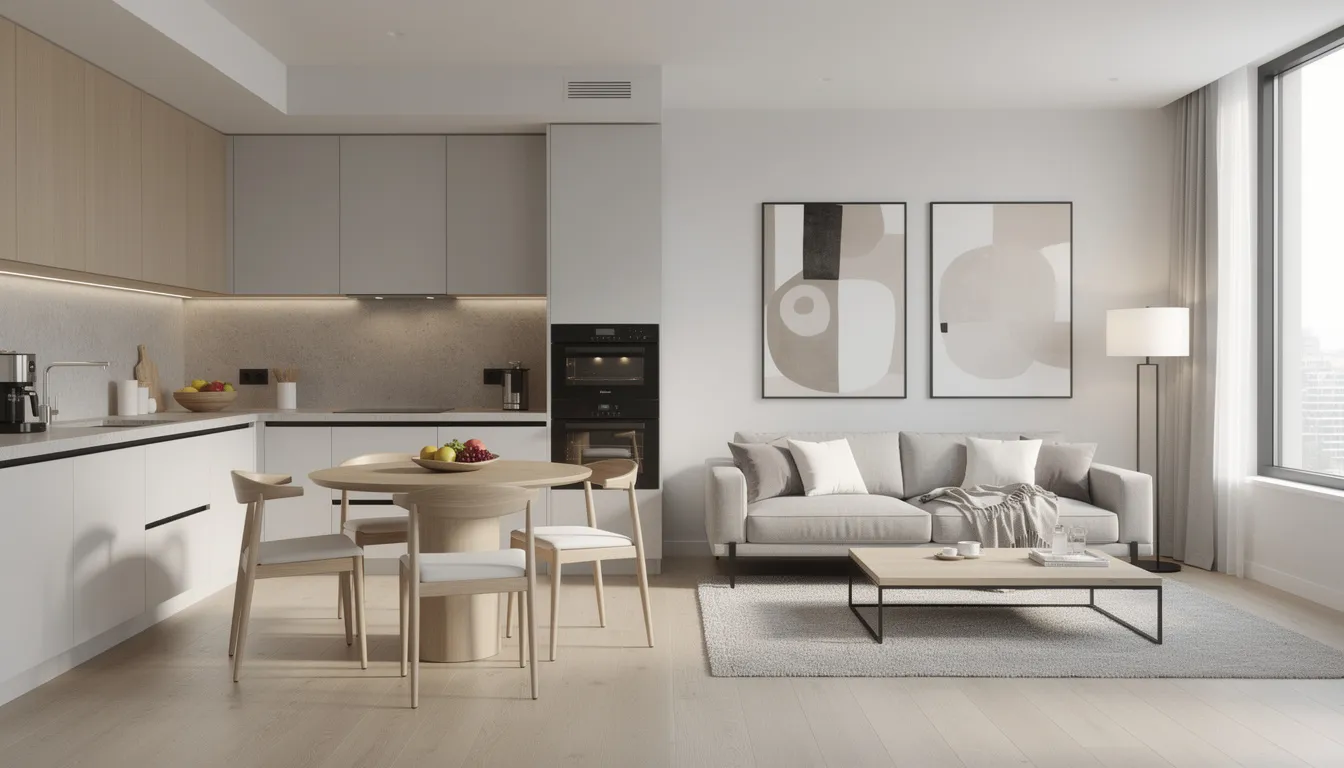
In modern Australian apartments, dedicated dining rooms are rare. Instead, the dining area is typically carved out of an open-plan kitchen or dining area that flows into the living space. This means your dining table needs to work with the sofa, kitchen island and balcony access—not compete with them.
How the shape of the table affects traffic flow
-
Round and oval tables eliminate sharp corners, making it easier to move between the kitchen, sofa, and balcony doors.
-
Slim rectangular tables can sit parallel to walls or kitchen benches, creating clear pathways through the room.
-
Square tables work well tucked into corners, but can block flow in narrow spaces.
Rectangular tables are ideal for narrow spaces, while round tables help create a sense of openness in small dining rooms, particularly in compact areas.
A practical layout example: Consider a narrow 2.8m-wide combined living/dining room in a Melbourne apartment. A slim 140cm x 70cm rectangular table aligned parallel to a sofa creates a natural separation between zones while leaving a 90cm walkway to the balcony.
Keep your style cohesive. For a polished look in small apartments, coordinate your dining room furniture with the rest of the room's pieces. Choose similar timber tones—light oak or walnut—across your dining set, bar stools and living room furniture. This visual consistency makes compact spaces feel intentional rather than cramped.
Top Space-Saving Dining Table Types for Family Meals
This section covers the core table styles that work best for real family use in compact rooms. Compact dining tables are designed to maximise space while maintaining aesthetic appeal, accommodating different family sizes and needs. Each type solves a different problem, from everyday dining for two that expands to accommodate more guests to fold-away solutions for studio apartment living.
All examples reference modern, affordable, designer-inspired styles suited to Australian compact spaces—the kind of pieces you'll find in Upinteriors' dining collection.
1. Extendable Dining Tables for Everyday to Entertaining
Extendable dining tables are the workhorses of small-space dining. They stay compact for weeknight meals and stretch out when family arrives for birthdays or Sunday lunch.
How they work
-
Butterfly leaf mechanisms fold out from inside the table in seconds.
-
Slide-out panels pull from either end to add extra seating.
-
Look for smooth, one-person operation—important for busy families
An extendable dining table is perfect for those who need extra seating for guests but want to save space when it's not in use.
Example setup: An "Ainslie-style" extendable dining table starts at 120cm closed, seating four comfortably for everyday use. Extended to 180cm, the same table accommodates up to eight guests for dinner parties without needing a second table.
Best room fit: Extendable tables work well in dining zones between 2.6m and 3m wide, or in open-plan spaces where extra length is needed only occasionally.
Materials to look for
-
Durable oak veneer with sealed finishes resists spills for up to 24 hours.
-
Easy-clean ceramic tops suit young families.
-
Matte lacquer finishes hide fingerprints better than high-gloss finishes.
2. Round & Oval Tables to Improve Flow
A round dining table removes sharp corners, making it safer for kids and easier to navigate in tight spaces. This simple shape change can transform the feel of a compact dining area.
Why round works
-
No corners to bump into when walking past
-
Easier to squeeze an extra chair in for unexpected guests
-
Natural conversation flow—everyone can see each other
Size guide
-
110cm–120cm round tables seat four comfortably and can squeeze five to six for casual meals
-
Ideal for a 3m x 3m dining zone or an open-plan corner
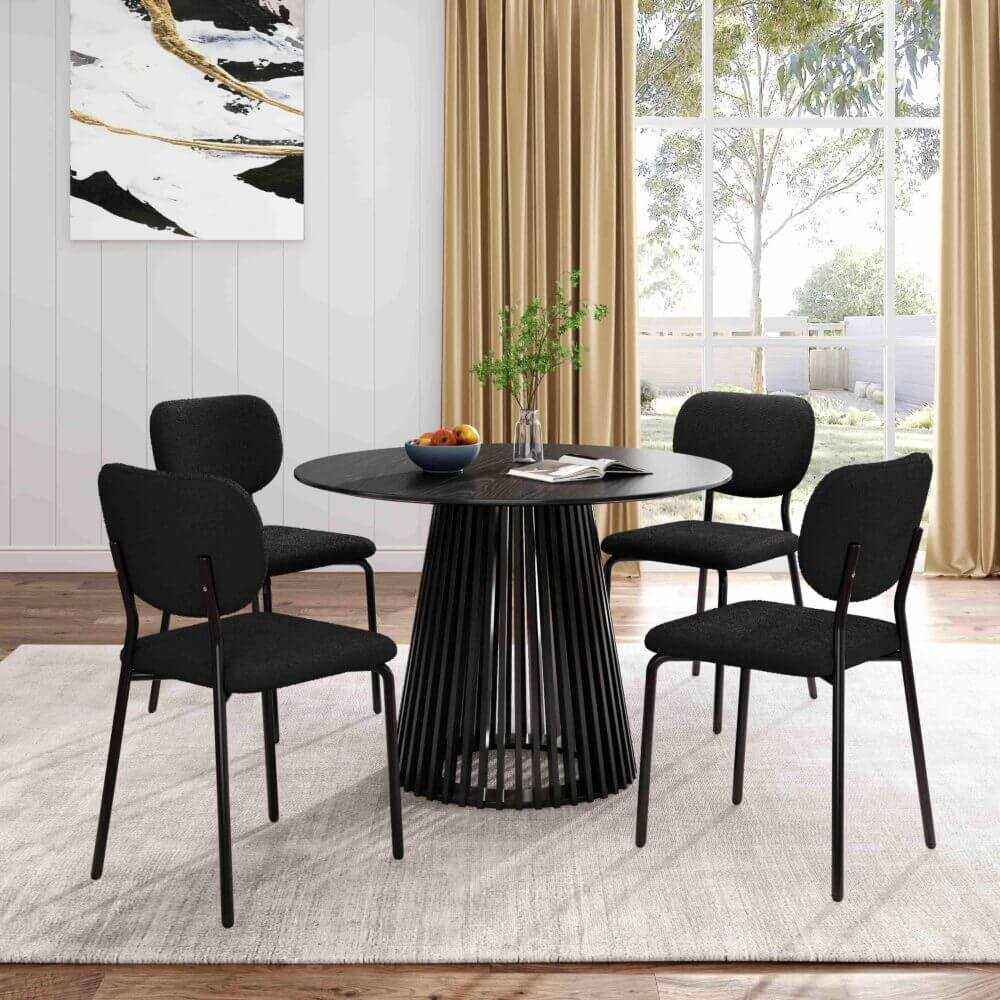
The pedestal advantage: Round tables with single pedestal bases free up more room underneath. Without four bulky legs in the way, chairs tuck in closer, and diners have more legroom—roughly 12–15cm more than traditional four-leg designs.
Oval for narrow rooms. An oval 160cm table can sit parallel to a sofa or kitchen island, guiding traffic flow through narrow open-plan rooms while still seating six.
Popular finishes, light timber finishes and white tops suit coastal and Scandinavian décor trends popular in Australian modern homes.
3. Slim Rectangular Tables for Narrow Rooms
Many Australian apartments and terraces have long, narrow combined living/dining rooms. Narrow dining tables are designed specifically for these layouts.
Typical dimensions
-
60–80cm deep (front to back)
-
140–180cm long
-
Seats four to six people without overwhelming the room
-
Square tables can be pushed into corners to maximise space and accommodate more people in compact dining areas.
Example setup A "Bondi-style" slim dining table measuring 75cm deep x 150cm long sits along a wall with a bench on one side and two chairs on the other. This arrangement seats five while leaving more room for walking past.
Multi-use potential A rectangular table with good depth (around 75cm) can double as a work-from-home desk or homework hub between meals. Clear the laptop, set the placemats, and you're ready for dinner.
Visual lightness matters. Choose designs with thin tops, tapered legs and open bases rather than chunky farmhouse styles. This prevents the table from visually dominating the limited space.
4. Drop-Leaf and Foldable Tables for Ultra-Tight Spaces
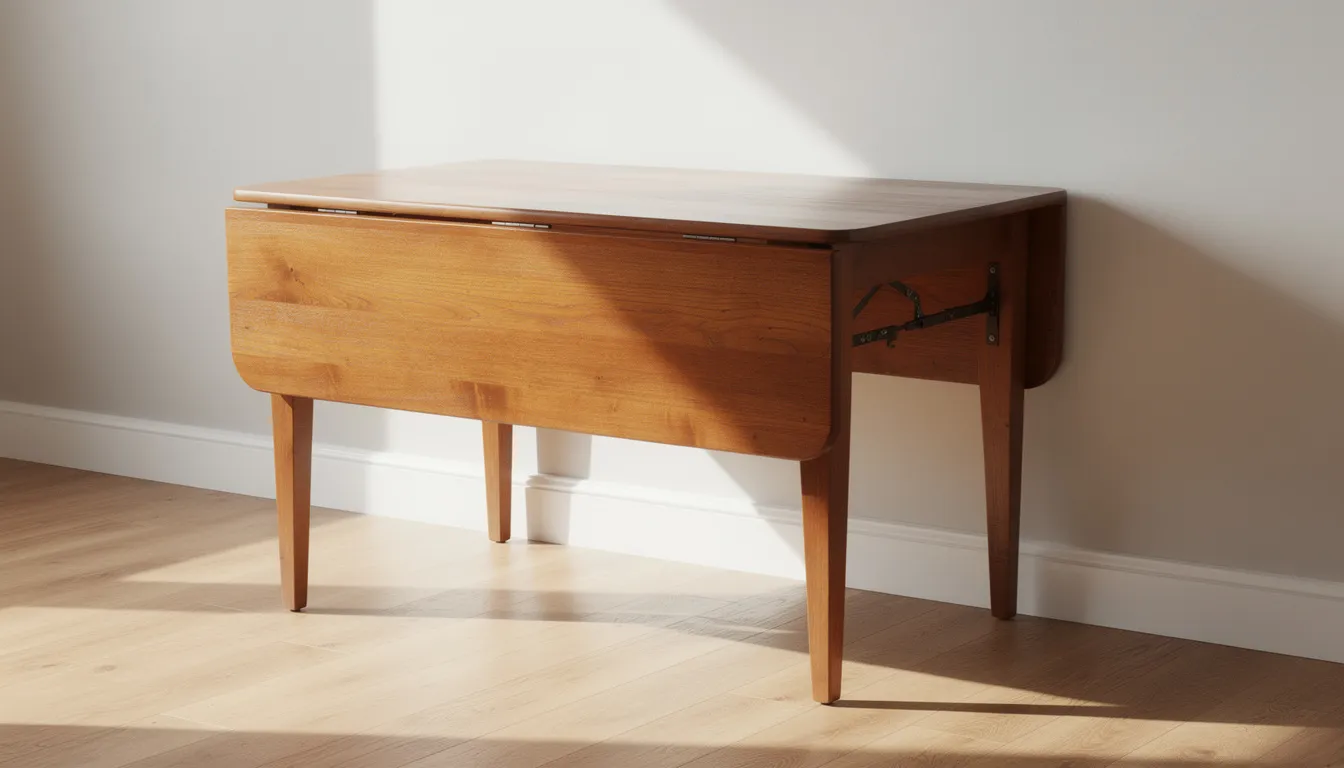
The best space-saving dining table options for compact homes include extendable, drop-leaf, and gateleg designs. For studio apartment living, granny flats or multipurpose lounge rooms, drop-leaf tables and wall-mounted tables offer the ultimate flexibility.
Drop-leaf dining tables are a great addition to small homes, as they can be used as two separate tables or as one large table.
How drop-leaf tables work. Drop-leaf tables are popular space-saving dining options for small homes because their hinges allow the leaves to fold down. A 90cm round drop-leaf table folds down to a slim console against the wall when not in use, then opens up to seat four for family meals. Some designs halve their footprint with leaves down, recovering up to 50% of floor space.
Wall-mounted fold-down options. These tables attach directly to the wall and fold flat when not needed. Wall-mounted and foldable tables can be folded away when not in use, making them excellent for limited spaces. They work brilliantly as compact breakfast bars in kitchen nooks or kids' craft tables, and they are easy to clean.
Best for renters: Look for freestanding drop-leaf designs if you can't drill into walls. A table that converts from two to four seats provides renters with flexibility without permanent modifications.
Styling tip: Keep finishes simple and neutral—white, light oak, or grey—so the table visually "disappears" when folded away rather than drawing attention as an awkward piece of furniture. These options help save space in ultra-tight areas.
5. Bar-Height and Counter-Height Tables That Double as Prep Space
In small kitchens where dining and food prep overlap, taller tables can do double duty. Bistro tables and counter-height designs blur the line between kitchen bench and eating area.
Height definitions
-
Counter-height: around 90cm (works with standard kitchen bench heights)
-
Bar-height: around 100–105cm (suits taller bar stools)
Example setup: A 120cm x 60cm counter-height table backing onto a kitchen island or wall seats two to four people on stools. Between meals, it functions as an extra prep space or a laptop perch.
Stool storage: Slim stools that slide fully under the tabletop keep the floor visually clear when not in use. This makes easy movement through the kitchen possible, even in tight layouts.
Practical for families, bar and counter tables create casual breakfast bars for kids in the morning and a quick laptop workspace for adults during the day—maximising the return on your limited floor space.
Smart Seating Choices for Small Dining Areas
Choosing the right dining chairs is just as important as the table itself. Bulky armchairs can make even a small table feel cramped, while the right seating can open up your dining area.
Basic guidelines
-
Allow about 55–60cm width per place setting.
-
Leave around 25–30cm between the seat height and the tabletop for comfort.
-
Prioritise chairs that tuck fully under the table when not in use
Slim Armless Chairs
Armless chairs are the best choice for compact dining because they slide completely under the table, allowing more seats along each side.
What to look for
-
Seat widths of 45–48cm
-
Slender leg profiles in timber or metal
-
Curved backs for comfort without bulk
Fabric or faux-leather upholstery still works in armless designs—keep the silhouette light and avoid overstuffed cushions. Choose chairs in similar tones to your table for a cohesive, uncluttered look that suits modern interiors.
Stackable and Folding Chairs
Stackable and folding chairs are ideal for families who only need extra seating on weekends or when hosting more guests.
Storage benefits
-
Three to four lightweight chairs stack in a corner or closet
-
Folded chairs slip into a wardrobe or behind a door.
-
Frees up floor space for everyday living
Practical picks Stackable timber or metal chairs with wipe-clean seats handle kids' messes easily. Mix them with two "main" upholstered chairs at the table for everyday comfort, bringing out the extras only when needed.
Online shopping tip: Check the weight, folded depth and stack height before buying—these specs determine whether the chairs actually fit your storage space.
Space-Saving Benches and Built-In Seating
Benches provide flexible seating and tuck under rectangular tables to clear floors.
Example layout A 140cm bench paired with a slim table along a wall seats three kids comfortably on school nights. Adults take the chairs on the open side for easy access.
Storage benches. Some benches include lift-up seats with built-in storage for kids' toys, placemats or extra cushions—valuable real estate in tiny homes.
Placement tip: Position benches on the wall side of the table, with individual chairs on the open side. This provides adults with easier access, while children slide in against the wall.
For owners renovating, a built-in banquette creates permanent seating that maximises every centimetre of a compact dining area.
Styling Tips to Make a Small Dining Table Feel Bigger
Clever styling can make even a two or four-seater small table feel generous and intentional. These practical tips can be implemented over the weekend without any renovation work.
Light, Cohesive Colour Palettes
Light timbers, white and soft neutral tables and chairs make a small dining corner feel airy and open.
How to apply this
-
Pair a light oak or white table with chairs in similar tones.
-
Add colour through cushions, placemats or wall art instead of bulky furniture.
-
Dark tables can work if the surrounding walls and décor are bright and uncluttered.
Popular Australian styles, Coastal, Scandinavian and organic modern, all suit compact homes. These styles rely on natural materials and restrained palettes that reflect light and create perceived depth rather than visual clutter.
Rugs, Lighting and Wall Art to Define the Zone
A few strategic accessories can anchor your dining area as a distinct zone within an open-plan layout.
Rugs: Choose a rug just larger than the table so chairs stay on it when pulled out. A jute or low-pile rug defines the dining zone without adding visual weight.
Lighting A single slimline pendant light centred over the table creates an intimate "bubble" of light, drawing the eye to the dining area as a focal point.
Wall art Hang artwork vertically to draw the eye up, making ceilings feel higher. A mirror opposite a window can reflect light and visually double the size of a tiny dining nook.
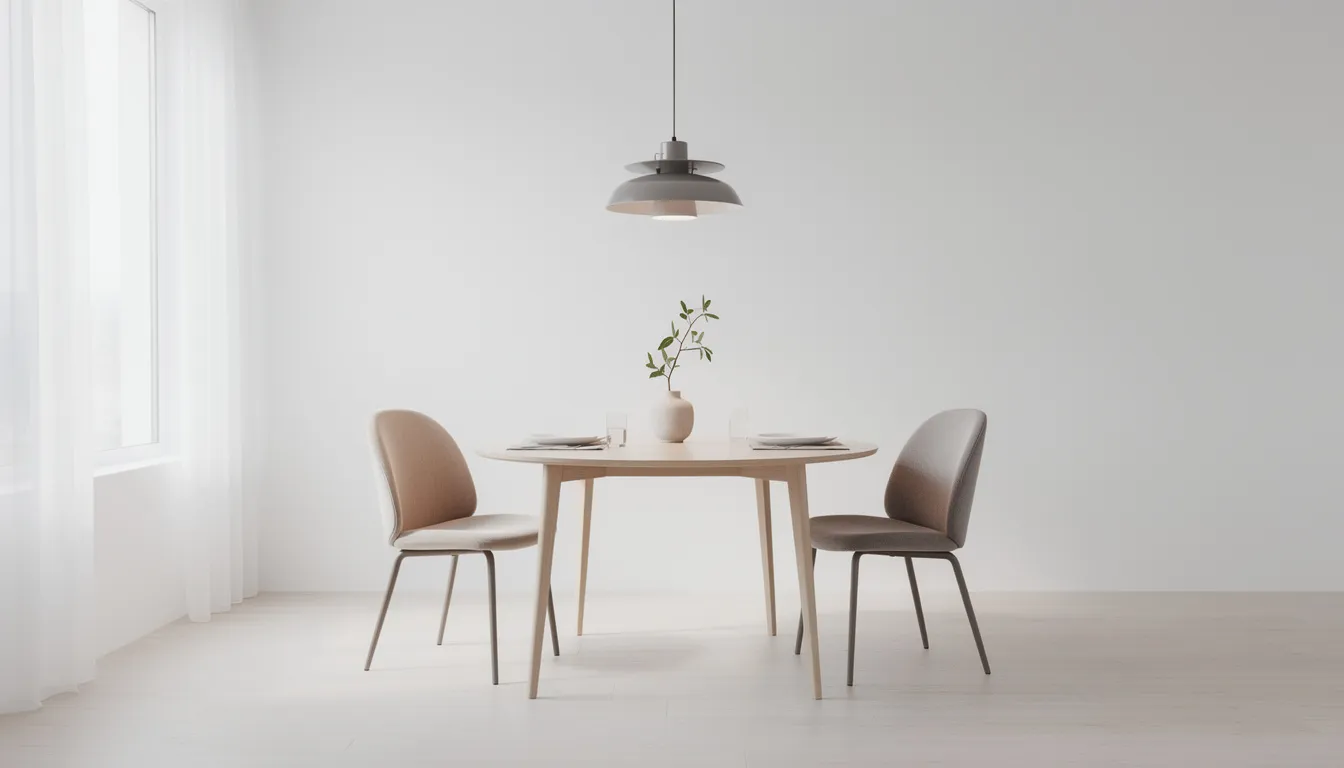
Example vignette: A 110cm round oak table with four white armless chairs sits on a jute rug. A simple linen runner and a low bowl with greenery complete the look without crowding the tabletop.
Choosing the Right Size and Shape for Your Family
The size and shape of your dining table must match both your floor plan and your family's habits. There's no point buying a table that seats eight if it blocks your kitchen access, or a tiny bistro table if you host family lunch every Sunday.
Quick comparison guide
|
Scenario |
||
|---|---|---|
|
Young family of 4, regular dinners at home |
||
|
A couple who entertain fortnightly |
||
|
Share a house with 3-4 flatmates |
150cm slim rectangular |
Seat everyone without dominating the room |
|
Empty nesters downsizing |
90cm drop-leaf |
Small footprint, expands when kids visit |
Rental-friendly thinking Renters who can't renovate should prioritise freestanding tables that don't require wall mounting. Extendable and drop-leaf designs offer flexibility without permanent modifications.
Planning for growth and expecting your family to grow? Choose an expandable dining table now rather than replacing a small table in two years. The additional space required when extended is only needed occasionally.
Quick Size Guidelines for Compact Homes
|
Table Size |
Shape |
Typical Seating |
|---|---|---|
|
90–100cm |
Round |
2–3 people |
|
105–120cm |
Round |
4–5 people |
|
120–140cm |
Rectangular |
4 people |
|
140–160cm |
Rectangular |
4–6 people |
|
160cm+ extended |
Extendable |
6–8 people |
Remember the 90cm rule. Always add at least 90cm clearance around the table for pulling out chairs and walking past. In a tight but workable layout, a 120cm round table fits in a 2.6m nook with a built-in bench against one wall.
Before you buy online, compare product dimensions with a taped outline on your own floors. Upinteriors' product pages list full dimensions, including leg placement, making it easier to plan your layout before the table arrives.
Upinteriors: Space-Saving Dining Solutions for Real Australian Homes
Upinteriors is an Australian online furniture store focused on modern, affordable, stylish designs that work in real compact homes. The dining collection includes compact round tables, extendable family tables and slim rectangular designs suited to local apartment layouts. Many Upinteriors tables feature durable finishes, such as timber and MDF, making them lightweight, sturdy, and easy to maintain for everyday use and quick cleaning. Some dining table models also offer built-in storage options to reduce the need for extra storage furniture.
Many pieces are designed to coordinate with Upinteriors' living room furniture, rugs and wall art, making it simple to create a cohesive look across your living areas without visiting multiple stores.
With competitive pricing compared to traditional designer showrooms and delivery across Australia, Upinteriors makes it easy to find dining furniture that transforms even the tiniest dining nook into a family hub.
Explore the full range of dining table sets and small-space solutions at Upinteriors to find the right table for your home.
FAQ: Dining Tables for Space-Saving Family Meals
What is the smallest dining table size that can comfortably seat a family of four?
A 105–110cm round table or a 120cm x 75cm rectangular table is usually the minimum for four average-sized place settings without feeling cramped. This allows roughly 60cm of width per person, accommodating a standard dinner plate, cutlery, and a drink. Remember to factor in approximately 90cm of clearance around the table, wherever possible, for pulling chairs out and comfortable everyday movement.
Which dining table materials are best for young families in compact homes?
Durable, easy-clean finishes handle the realities of family meals best. Sealed oak veneer, solid rubberwood, high-pressure laminate and ceramic tops all resist spills and wipe clean quickly. For young families, choosing dining tables with durable finishes—such as those on timber and MDF surfaces—helps ensure the table remains lightweight, sturdy, and easy to maintain for everyday use. Avoid soft, easily marked woods or high-gloss dark finishes if fingerprints, crayon marks and food spills are a regular concern in your household.
How can I make one small table work for both dining and working from home?
Choose a slim rectangular or extendable table with a depth of approximately 75cm to hold a laptop, notebook, and coffee comfortably. Between work and meals, use stackable storage boxes or a nearby console table to quickly clear work items. This keeps the dining area visually calm and signals a mental shift from work mode to family time.
Is a bench or chairs better for a tiny dining nook?
Benches maximise seating capacity against walls and tuck fully under the table to clear floors, making them excellent for kids. Individual chairs are easier to move and more comfortable for adults who need to get in and out frequently. The best solution for many families is a combination: a bench on the wall side for kids, with slim chairs on the open side for adults and guests.
Can I fit a dining table into a studio apartment without losing my living area?
Yes—the key is choosing a table that transforms or disappears when not in use. A drop-leaf or wall-mounted fold-down table doubles as a console or desk, taking up minimal floor space between meals. Position it near a window or along a clear wall, and store two chairs elsewhere (stacked in a wardrobe or behind the sofa) to keep your living area open day-to-day.