
Key Takeaways
-
In Australia, queen beds measure around 153cm x 203cm (queen mattress dimensions) and dominate the market, fitting most apartments and standard bedrooms. King beds at 183cm x 203cm offer 30cm extra width (king size mattress), providing extra comfort for couples, families, or those who share with pets—ideal for larger master suites, light sleepers, or families who co-sleep.
-
Both king and queen beds share the same length; your decision hinges on that extra width and how it affects room layout, comfort, and long-term costs.
-
Queens suit most Australian bedrooms, first homes, and rental properties, while kings shine in spacious master suites where the extra personal space justifies the higher investment.
-
Use room dimensions, lifestyle factors, and total budget as your main filters—this guide will help you decide in under 10 minutes.
-
Upinteriors offers both king and queen Australian-size bed frames and mattresses with modern designs, competitive pricing, and delivery across Australia.
Introduction: Why Bed Size Matters More Than You Think
When it comes to king vs queen-size beds, choosing the right option affects more than just how much sleeping space you get each night. This guide is for Australian homeowners, renters, and anyone shopping for a new bed who wants to make the right choice for their space and lifestyle. Choosing the right bed size impacts not only your sleep quality but also your room's functionality and overall comfort. Bed size directly influences your sleep quality, bedroom flow, and how well other furniture and décor pieces sit in the space. In Australian new-builds, typical secondary bedrooms measure around 3m x 3m. In comparison, main bedrooms range from 3.5m to 4m wide—dimensions that push many households toward a queen-size bed as the practical default.
In Australia, a queen bed measures 153 cm wide by 203 cm long, while a king bed measures 183 cm wide by the same length. This article compares king vs queen size beds for Australian standards, including comparing king and queen mattress sizes, written from Upinteriors' perspective as an online furniture and homewares retailer. The focus is practical: room measurements, lifestyle considerations (solo, couple, kids, pets), and total cost of ownership beyond the mattress sticker price. You'll find a decision checklist and FAQs at the end to help with your queen vs king decision-making so you can confidently choose your perfect bed today.
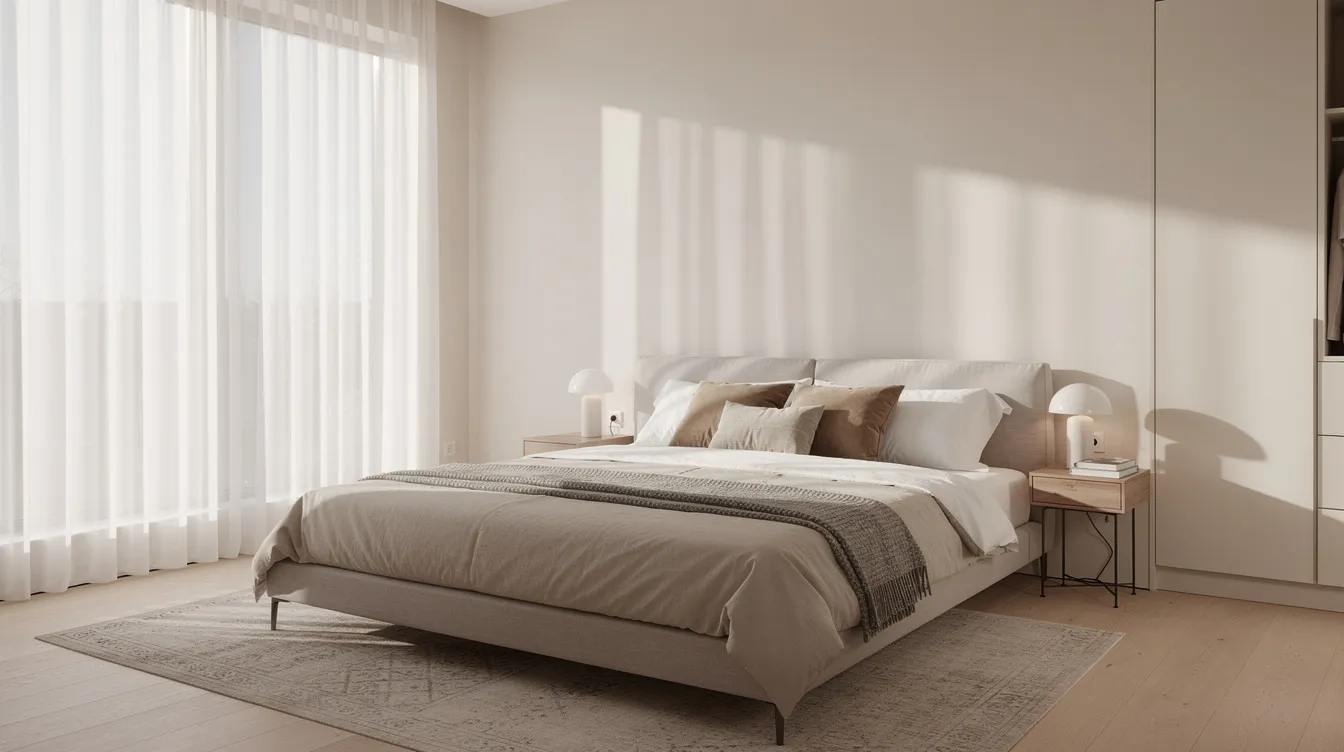
King vs Queen: A Quick Comparison for Australian Homes
Queen beds remain the default choice for most Australian homes, while king beds represent a deliberate upgrade for those seeking extra space and luxury. Understanding the key differences helps you make the right call when considering queen vs king options.
In Australia, a queen bed measures 153 cm wide by 203 cm long, while a king bed measures 183 cm wide by the same length. The extra 30cm width provides significantly more room—roughly equivalent to a single bed's worth of personal space for each of two adults sharing the bed.
Queen-size bed dimensions: Approximately 153cm wide by 203cm long. The standard queen is a popular choice, accounting for 60-70% of adult mattress sales in Australia and fitting comfortably in rooms measuring 3m x 3m to 3m x 4m.
King-size bed dimensions: Approximately 183cm wide by 203cm long. A king bed provides each person with the equivalent of a single bed's width (91.5 cm), while a queen bed offers about 76.5 cm per person. This makes the king a better choice for couples who need more personal space.
Here's how they compare in practical terms:
-
Solo sleepers: Both sizes work well; a queen bed offers ample space, with the standard queen a popular choice for individuals without dominating smaller bedrooms.
-
Couples: Queens suit most pairs comfortably; kings reduce partner disturbance by up to 40%.
-
Co-sleeping families and pet owners: Kings provide the extra room needed for children or medium-sized dogs.
-
Minimum comfortable room sizes: Queens from 3m x 3m; kings from 3.6m x 3.6m.
-
Cost difference: Kings typically run 20-40% more than equivalent queens.
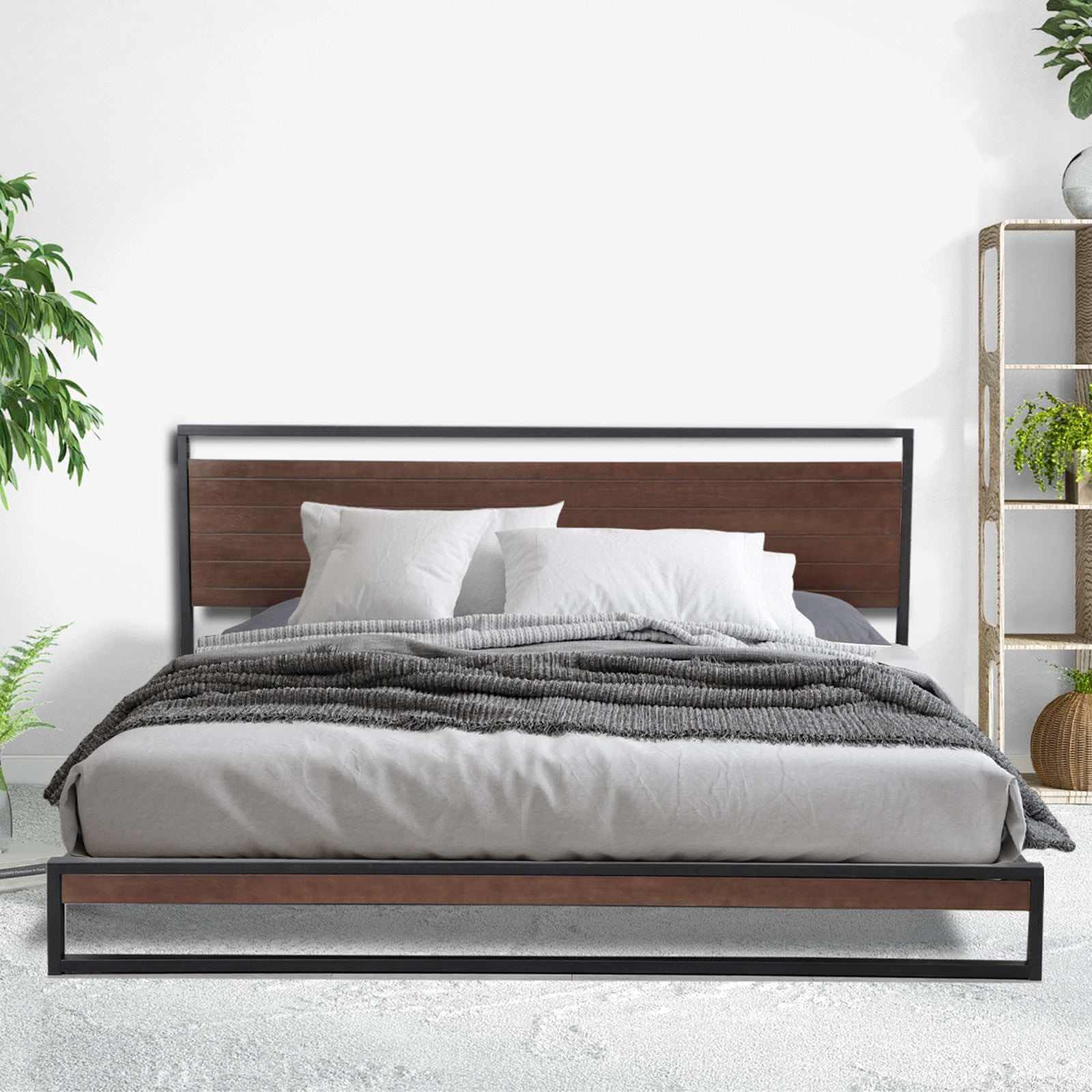
Both king and queen work beautifully with décor styles from Upinteriors—upholstered bedheads, timber frames, and wall art. The difference lies in scale: a king bed creates that hotel-like feel in larger rooms, while a queen maintains perfect balance in compact spaces.
Will It Actually Fit? Dimensions, Room Size and Layout
Measuring your room is the first non-negotiable step before choosing a king or queen. Misjudging scale can transform a stylish bedroom into a cramped space where you're constantly bumping into furniture. Bedroom size is crucial to ensure your bed fits comfortably.
The standard Australian mattress dimensions used throughout this guide are queen at approximately 153cm x 203cm and king at approximately 183cm x 203cm. Some brands vary by 1-2cm, so always check product specifications.
That extra 30cm king width has real-world consequences. When you add bedside tables, a dresser, or a console table from Upinteriors, side clearance shrinks noticeably compared to a queen setup.
Room Size Guidelines
Room size guidelines:
|
Size Minimum Room Comfortable Room. Ideally, a choice for most Australian homes, as it fits well in most bedrooms while still providing ample sleeping space. |
|---|
Aim for at least 70-80cm of walking space along each accessible side and the foot of the bed. Larger rooms may allow 1m or more for a truly open, modern aesthetic.
Planning Your Bedroom Space Like a Pro
Measure not only the room but also doors, wardrobes, and window positions. Sketch a quick floor plan on paper or use a simple phone app to visualise the layout.
Place the bed first (king or queen) on your plan, then layer in essentials: bedside tables, a tallboy or dresser, a storage bench, perhaps a desk if it’s a multi-purpose room.
In typical Australian apartments with 3m x 3m second bedrooms, a queen bed leaves adequate space for two small bedside tables and a slim dresser. A king-size bed in the same room forces compromises—perhaps single bedside access or no additional storage.
Styling tips from Upinteriors: In tighter spaces with a queen, use slimline bedside tables and wall-mounted lamps to keep the floor feeling open. In larger rooms with a king, consider wider artworks and an upholstered bedhead to anchor the wall proportionally.
Always check power points, windows, and built-in wardrobes. A larger bed shouldn't block access or natural light, especially in compact 2020s-era Australian floorplans.
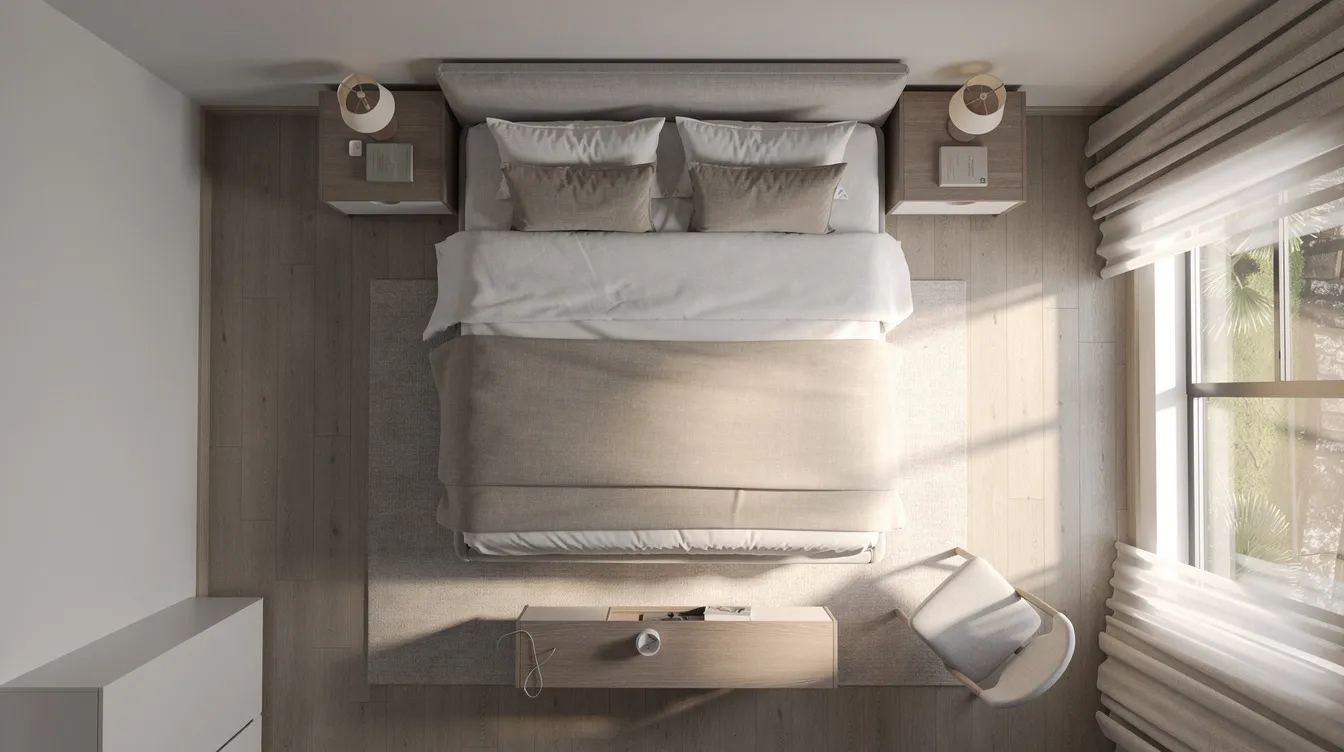
Key Layout Considerations for King vs Queen
Think about how you move through the room daily: getting ready for work, accessing wardrobes, changing linen, and cleaning under the bed. Your sleep style can also affect layout needs, as some people require more space around the bed for comfort or specific nighttime routines.
Queens preserve circulation space, making smaller rooms feel calm and uncluttered. This pairs naturally with minimal modern furniture from Upinteriors.
In a generous main bedroom (4m x 4m in a family home built after 2015), a king bed visually balances the room. It creates a boutique-hotel feel—especially with a statement bed frame and layered bedding.
Consider whether you want space for a bedroom chair or a console table at the foot of the bed. Queens often allow these styling options in medium-sized rooms, whereas a king may restrict them.
Renters in older terrace houses or inner-city apartments should double-check awkward walls and chimney breasts that may limit king placement even when the room size on paper seems adequate.
Matching Bed Size to Your Lifestyle and Sleep Habits
Beyond measurements, lifestyle factors often make the final decision clear: who sleeps in the bed, typical bedtimes, and how restless each person is.
Common Australian household setups include solo professionals in city apartments, couples in first homes, families with young children who occasionally co-sleep, and pet owners whose dogs share the bed.
Queen Beds: Ideal for Flexibility and Compact Spaces
For solo professionals or guest rooms where flexibility matters, finding the perfect mattress—one that suits a variety of sleep styles and sleeping positions—can make a queen-size ideal for comfort and versatility.
For many couples without children or pets, a queen bed offers enough width to sleep comfortably while leaving room for stylish bedroom furniture and décor.
When a King Bed Makes All the Difference
Contrast this with situations where a king becomes strongly recommended: light sleepers, shift workers with mismatched schedules, larger-framed individuals, or parents with toddlers who end up in bed most nights. Studies suggest that couples on queen mattresses experience up to 30% more nighttime disruptions than those on king mattresses.
Who Is a Queen Bed Best For?
Queens suit these situations particularly well:
-
Solo sleepers who want more space than a double bed (also known as a full bed) without dominating a smaller bedroom
-
Most couples in standard Australian bedrooms (3m x 3.5m or 3m x 4m) seek the perfect balance between closeness and room to move.
-
Guest rooms and secondary bedrooms where flexibility matters
-
Renters and frequent movers who value the queen's lighter weight (40-50kg vs 60-70kg for kings)
-
Young couples are planning to move between apartments and houses over the next 5-10 years.
Queens work well with storage bed frames or gas-lift bases from Upinteriors, freeing up floor space in compact homes.
When a King Bed Makes All the Difference
A king bed becomes highly valuable when:
-
Couples feel cramped in a queen bed or regularly wake each other up by moving around.
-
Partners prefer very different sleeping positions.
-
Light sleepers or shift workers need maximum separation.
-
Families that co-sleep with young children or whose kids frequently climb into bed early in the morning
-
Pet owners share the bed with medium-to-large dogs.
-
Taller or larger-bodied individuals need more room to spread out
The extra width effectively gives each partner space similar to a single bed—approximately 91.5cm per person, compared with 76.5cm on a queen. If your bedroom is large and your budget allows, choosing a king now can future-proof the space for potential lifestyle changes.
Budget, Bedding and the True Cost of Upsizing
Moving from a queen to a king adds a noticeable cost beyond the mattress and bed frame. Linen, quilts, moving, and assembly all factor in.
In the Australian market, a comparable king mattress typically costs 20-40% more than its queen counterpart from the same brand or product range. For example, a $1,500 queen hybrid might have a king equivalent at $2,000-$2,400.
Upgrading may require a new frame, potentially new bedside tables, or a wider headboard to maintain proportion—all available from Upinteriors at competitive prices.
Think in terms of cost-per-night over an expected 8-10 year mattress lifespan. A moderate price difference spread across thousands of nights may prove worthwhile for better sleep quality.
Ongoing Bedding and Accessory Costs
King-size sheets, quilt covers, and blankets use more material—typically 20-30% more fabric—making them consistently pricier than queen-size equivalents.
Most households own multiple linen sets. Over time, the price gap multiplies as new sets are purchased or replaced.
Additional accessories to budget for:
-
Mattress protectors (significantly pricier in king)
-
Electric blankets
-
Seasonal quilts and throws.
-
Decorative pillows
Upinteriors curates bedding and décor in both queen and king sizes, helping soften long-term cost differences with affordable, design-led options.
If the budget is tight, choosing a queen bed and investing savings into a higher-quality mattress, premium pillows, or statement wall art may deliver a better overall upgrade in comfort and style.
Long-Term Value and Practical Considerations
Estimate how long you expect to keep the next bed—typically 8-10 years—and consider whether you'll move homes during that time.
King beds are heavier and bulkier, potentially incurring higher moving costs. They're more challenging to manoeuvre in older Australian homes with narrow hallways and stairs.
Frequent movers, students, or inner-city renters often find queens more practical due to easier transport and flexibility with different floor plans.
Settled homeowners with a large bedroom may find that investing in a king bed adds perceived value and luxury, especially when paired with coordinated furniture from Upinteriors.
The best value option delivers a good night's sleep and a functional room—not necessarily the cheapest up-front purchase.
Logistics: Delivery, Access and Assembly
Practical constraints—lifts, staircases, corridor turns, and doorway widths common in Australian apartments—can make king-size delivery trickier than queen.
Measure the path from building entrance or garage to bedroom: door widths (often 80-90cm in pre-1990s homes), stair clearances, and elevator dimensions (typically 1.1m x 1.4m in modern apartments).
Queen mattresses generally suit two-person couples. King mattresses may require additional helpers or professional delivery, with return rates hitting 15% due to access issues in older homes, compared with just 5% for queens.
Bed frames from Upinteriors typically arrive flat-packed for easier navigation through tight spaces, though solid or upholstered king frames still feel bulkier than queen counterparts.
Those in older terraces or apartments built before the 1980s should be particularly cautious—smaller structural openings were common.
Modern Solutions: Bed-in-a-Box, Split King and Modular Frames
Bed-in-a-box mattresses compress and roll in both queen and king sizes, making them easier to deliver through narrow hallways and lifts—a game-changer for Sydney and Melbourne apartments.
A split king setup uses two long single mattresses on a king base. Benefits include:
-
Easier to move (20% lighter per half)
-
Different firmness levels for each sleeping partner
-
Simpler navigation through tight corners
Modular or slatted bed frames from Upinteriors assemble in-room, solving tight-corner challenges.
Plan where you'll assemble the bed, clear the space, and confirm the final position is reachable without awkward mattress twisting. For solid timber or fully upholstered king frames, consider professional assembly or enlist help.
Transport and Moving Considerations
When moving homes, consider the logistics of transporting your bed. King beds are heavier and bulkier, which can increase moving costs and make them more difficult to maneuver through tight spaces, especially in older Australian homes with narrow hallways and staircases. Queen beds, being lighter and more compact, are generally easier to move and fit into a wider variety of floor plans, making them a practical choice for renters, students, or anyone who relocates frequently.
Your Decision Checklist: King vs Queen for Your Home
Run through this checklist in a few minutes to reach your decision:
-
Measure your bedroom exactly, then sketch the bed and key furniture. If a king leaves less than 70cm walk space on any side, choose a queen.
-
Count who sleeps in the bed most nights. If anyone is a very light sleeper or notably restless, lean toward a king to reduce disturbance.
-
Set a total budget covering the mattress and frame, at least two full linen sets, and any new décor from Upinteriors. Tight budget? A queen often allows better quality within the same spend.
-
Think ahead 5-10 years: likely moves, changes in family size, or renovations. Uncertain about future spaces? A queen offers more flexibility.
-
Check delivery access: measure doors, hallways, and stairs. Limited space points to a queen or bed-in-a-box solution.
Real-Life Scenarios to Guide Your Choice
Inner-city apartment (3m x 3m bedroom, Sydney CBD): A queen bed maintains enough room for two bedside tables and a slim dresser without overwhelming the space.
Suburban family home (4m x 4m master, Brisbane): A king creates a resort-style retreat for parents who co-sleep with a toddler or have a medium dog who claims bed real estate.
Young professional rental (3m x 3.2m, Melbourne): A queen provides generous sleeping space while leaving room for a desk or dressing table from Upinteriors.
Downsizing a couple in a townhouse: A queen serves as a sensible compromise, keeping the room open and making moving between floors easier.
Both sizes style beautifully with Australian-made and curated furniture from Upinteriors. The right bed is the one that aligns with your space, lifestyle, and budget.
Conclusion: Invest in the Bed That Fits Your Life
Queen beds remain the versatile, space-savvy default for most Australian bedrooms, while king beds offer a luxurious upgrade for larger rooms, light sleepers, and co-sleeping families. Proper measurement, being honest about sleep habits, and planning for future moves prevent costly mistakes.
A bed represents a long-term investment in health, comfort, and your bedroom's overall feel. Even beautiful décor can feel wrong when the bed size doesn't match the space.
Explore Upinteriors' range of modern king and queen bed frames, mattresses, and coordinated décor online—with fast Australian delivery and competitive pricing. Use the checklist above, then browse Upinteriors to find a design that transforms your bedroom into a calm, stylish retreat.
Frequently Asked Questions
These questions address practical details that arise once you've narrowed your choice between king and queen. All answers are tailored to Australian sizes and homes, especially for those buying online from retailers like Upinteriors.
Will a king or queen bed make my bedroom look bigger?
In smaller rooms around 3m x 3m, a queen-size mattress helps the room appear larger by leaving more visible floor space and wall area for décor. In large master bedrooms (4m x 4m or more), a queen can look undersized and make the space feel empty, while a king balances proportions beautifully. Use lighter-coloured frames and vertical wall art from Upinteriors to prevent any bed from visually shrinking your room.
Is a queen bed big enough for two adults and a child?
A queen can accommodate two adults and an occasional child for short periods. However, if co-sleeping is a nightly habit, most families find it cramped. Regular co-sleepers benefit from a king bed, where everyone has enough space to sleep without frequent disturbances. If upgrading isn't possible immediately, a supportive queen mattress and quality bedding improve comfort.
Do I need to replace my bedroom furniture if I change from queen to king?
Many bedside tables and décor items work when switching sizes, but proportions shift—narrow bedside tables may look small next to a wide king bed. Measure the total width, including bedside tables, before committing. Tallboys, dressers, and wall art rarely need replacing; typically, only the bed frame and possibly the headboard require upsizing. Plan your whole bedroom look before purchasing additional pieces.
Is it harder to find bedding and accessories for king beds in Australia?
Both king and queen bedding are widely available, though some designs and colours appear more frequently in queen due to higher popularity. King-size quilt inserts and electric blankets can cost more and sell out faster during seasonal changes. Upinteriors curates bedding in both sizes with modern, neutral palettes. Always check labels to ensure you're buying Australian king or queen sizes rather than imported variants with different measurements.
Should I choose bed size based on my current home or plans?
If you own your home and plan to stay 5-10 years, choose the size best suiting your current main bedroom—even if it's a super king in a large bedroom. For renters, students, or frequent movers, prioritise flexibility and easier transport, which usually favours a queen. Uncertain about future living situations? A queen offers a safer, more adaptable option. Either way, investing in a quality mattress and timeless bed frame from Upinteriors carries value across multiple homes.