
Choosing the right dining table material can transform your dining space. It's not just about looks; durability and maintenance matter too.
Oak, marble, ceramic, and sintered stone are popular choices. Each offers unique benefits and challenges.
Oak is known for its timeless appeal and strength. It fits well in both traditional and modern settings.
Marble exudes luxury and elegance. Its unique patterns make each table a statement piece.
Ceramic tables are practical and stylish. They resist scratches and heat, ideal for busy households.
Sintered stone is a newer option, offering high durability and versatility. It mimics natural stone beautifully.
Understanding these materials helps you make an informed decision. Your choice will impact your dining room's style and functionality.
Understanding Dining Table Materials: What Matters Most?
Selecting the best dining table materials involves more than aesthetics. It's crucial to consider several factors that affect both form and function.
Durability is a primary concern. Dining tables endure spills, heat, and daily wear. Hence, your chosen material should withstand these demands.
Maintenance requirements can also differ across materials. Some need regular upkeep to remain in peak condition. Think about how much time you want to invest.
Visual appeal sets the tone for your dining space. Each material brings a unique texture and style, influencing the room's overall ambience.
Budget plays a key role too. Material costs vary, impacting your wallet differently. Opt for a material that balances cost with longevity and appeal.
To sum up, consider these core factors when choosing your dining table material:
-
Durability
-
Maintenance
-
Aesthetic
-
Cost
Reflect on these aspects as you explore options.

Oak Dining Tables: Timeless Warmth and Durability
Oak dining tables boast durability and versatility. This timeless wood suits both traditional and modern decor. Oak is renowned for its strength, providing a solid table that withstands daily use.
The warm hue of oak brings a cozy ambience. It can soften stark interiors, adding an inviting tone. This wood is a favourite among homeowners.
Oak's grain patterns contribute to its aesthetic appeal. Each table becomes unique, showcasing nature's artistry. This natural beauty remains stylish over time.
Sustainability is another advantage. Oak is a renewable resource. Choose tables made from responsibly sourced wood for an eco-friendly option.
Maintenance of oak tables is straightforward. Regular dusting and occasional polishing keep them gleaming. They require less attention than more delicate materials.
The weight of oak offers stability but can be cumbersome. Consider this if you anticipate frequently moving your table. Rearranging furniture might pose a challenge with oak's heft.
Oak dining tables complement a variety of home styles. They effortlessly blend with different colour palettes and textures. This flexibility ensures they remain a staple in home design.

Pros of Oak Dining Tables
Oak offers numerous benefits as a dining table material:
-
Durable and long-lasting
-
Warm and inviting appearance
-
Versatile in styling
-
Renewable resource
These qualities make oak a practical and stylish choice for many homeowners.
Cons of Oak Dining Tables
However, oak tables do have some drawbacks:
-
Can be heavy and hard to move
-
May require periodic refinishing to maintain appearance
-
Can be costly compared to other woods
Understanding these cons can help in making an informed decision.
Best Use Cases for Oak Tables
Oak tables suit various spaces and purposes:
-
Classic or rustic kitchens
-
Family dining rooms
-
Elegant dining areas
Their design flexibility allows them to fit into many settings, making them highly desirable.
Marble Dining Tables: Luxury and Unique Beauty
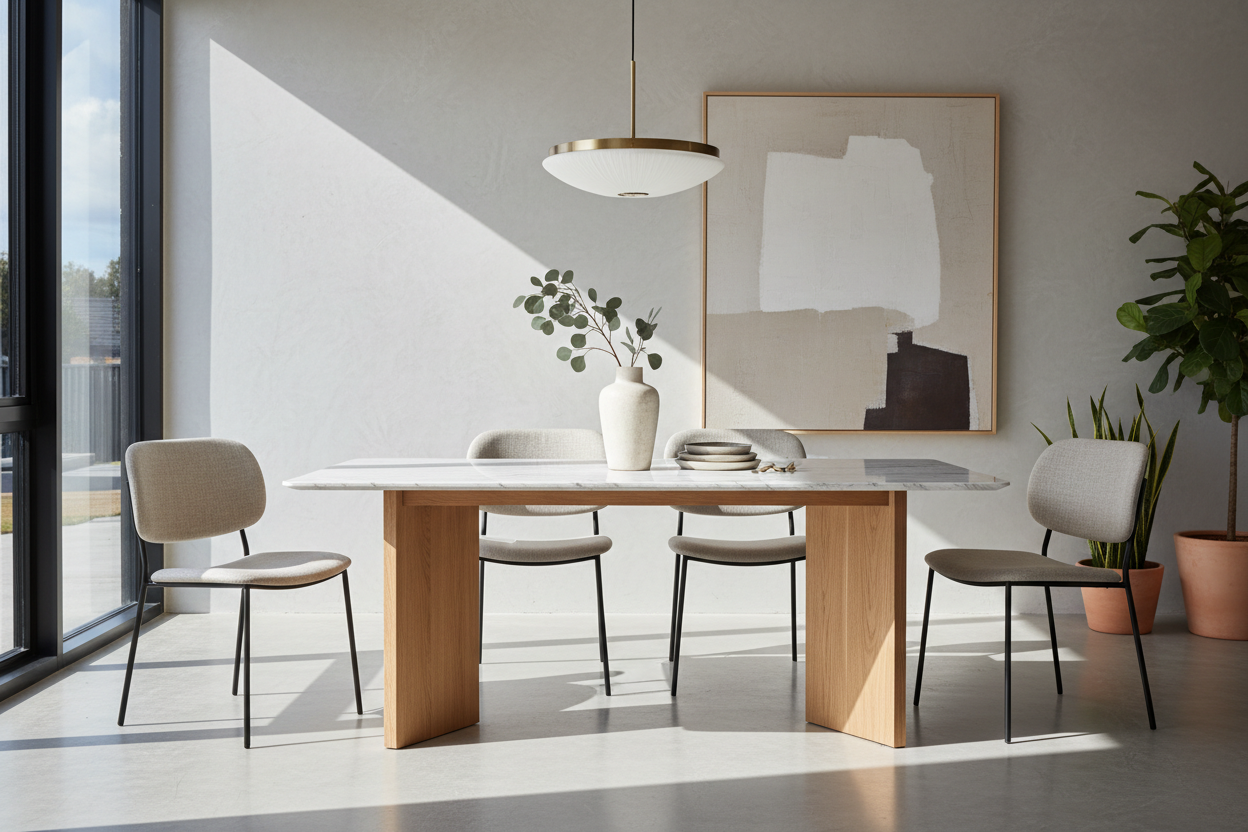
Marble dining tables exude luxury and elegance. Each piece of marble is distinct, showcasing individual veining and patterns. This uniqueness makes marble tables an eye-catching centrepiece in any dining room.
The cool, polished surface of marble adds sophistication. It elevates dining areas with a touch of class. Many interior designers favour marble for high-end homes.
However, the beauty of marble comes with care requirements. It is prone to scratches, stains, and etching from acidic substances. Regular maintenance is necessary to keep it looking pristine.
Choosing marble means opting for a natural stone. This comes with environmental considerations due to mining impacts. Consider sourcing marble from ethical, sustainable sources.
Despite these challenges, the appeal of marble remains strong. Its timelessness guarantees a long-lasting aesthetic value. Even as trends change, marble maintains its allure.
Marble dining tables often come with a hefty price tag. They are an investment in quality and style. Weighing cost against longevity and appeal is crucial.
Mixing materials can enhance a marble table's functionality. A wooden or metal base can add stability and contrast. This combination suits varied interior designs.

by Tammy Chan (https://unsplash.com/@tatamee)
Pros of Marble Dining Tables
Marble boasts significant benefits for those seeking luxury:
-
Distinctive and sophisticated appearance
-
Enhances decor with timeless elegance
-
Adds value to the home
These attributes make marble an attractive choice for many homeowners.
Cons of Marble Dining Tables
Despite its elegance, marble has notable cons:
-
Prone to stains and scratches
-
Requires regular maintenance
-
High cost compared to other materials
Understanding these downsides aids in making informed decisions.
Best Use Cases for Marble Tables
Marble tables excel in specific settings:
-
Formal dining rooms
-
Contemporary spaces
-
Homes emphasizing luxury
Their elegance suits homes seeking a standout, opulent feature.
Ceramic Dining Tables: Modern, Practical, and Stylish
Ceramic dining tables have gained popularity for their practicality and modern appeal. Known for their durability, they resist scratches, stains, and heat. This robustness is ideal for busy households.
The variety of designs available makes ceramic tables versatile. They can mimic other materials like wood or stone, matching any decor. This adaptability ensures they fit various design themes.
Easy-to-clean ceramic surfaces are family-friendly. Spills and messes wipe away effortlessly, making maintenance a breeze. This convenience appeals to those with active lifestyles.
Ceramic tables are often lighter than natural stone options. Moving or rearranging them is less cumbersome, allowing for flexibility in dining spaces.
Choosing a ceramic dining table often means lower environmental impact. Many are made with sustainable production methods and recycled materials. This eco-friendly nature is appealing to many conscious consumers.
The aesthetic options for ceramic tables continue to expand. From glossy finishes to textured surfaces, choices abound. Each option offers unique tactile experiences and visual appeal.
However, ceramic can sometimes feel cold to the touch. This may not suit everyone, as some prefer the warmth of wood. Consider this tactile aspect when deciding on a material.
Despite this minor drawback, ceramic remains a strong contender. Its stylish durability promises both form and function. For many, ceramic embodies the future of dining design.

by GoodLifeConstruction (https://unsplash.com/@goodlifeconstruction)

by Clay Banks (https://unsplash.com/@claybanks)
Pros of Ceramic Dining Tables
Ceramic tables offer several distinct advantages:
-
Highly durable and resistant to scratches
-
Easy to clean and maintain
-
Available in diverse styles and finishes
These features make ceramics a practical choice for busy homes.
Cons of Ceramic Dining Tables
Despite their many benefits, ceramic tables have some downsides:
-
May feel cold and less welcoming
-
Can be expensive compared to other materials
-
Limited tactile warmth compared to wood
Weigh these considerations when choosing a dining table.
Best Use Cases for Ceramic Tables
Ideal settings for ceramic dining tables include:
-
Contemporary kitchens
-
Modern dining spaces
-
Homes with high-traffic dining areas
Their stylish durability suits active lifestyles and sleek, modern interiors.
Sintered Stone Dining Tables: The New Standard in Performance
Sintered stone is emerging as a top material for dining tables. Known for its impressive strength, it resists scratches and stains effortlessly. This durability makes it perfect for families.
The aesthetic range of sintered stone is vast. It can mimic other materials like marble and wood, offering a wealth of design options. From natural stone finishes to sleek modern looks, it caters to diverse tastes.
Sintered stone is also resistant to heat. Placing hot items directly on the surface won't cause damage. This feature adds to its appeal for everyday dining.
Maintaining sintered stone is straightforward. It doesn't require sealing like natural stone. A simple wipe-down keeps it looking new, saving time on upkeep.
Despite its many benefits, sintered stone remains relatively light. This ease of movement helps when rearranging your dining space. It combines strength with practicality seamlessly.
Another point in its favour is its sustainability. Produced with eco-friendly methods, sintered stone has less environmental impact. This aligns with the values of environmentally conscious buyers.
Overall, sintered stone tables are increasingly popular. Their blend of beauty and resilience makes them a wise investment. Perfect for modern living, they're setting new standards in dining table materials.

by Shoham Avisrur (https://unsplash.com/@shoham_avisrur)

by eke interior (https://unsplash.com/@eke_interior)
Pros of Sintered Stone Dining Tables
Sintered stone tables boast numerous advantages:
-
Extremely durable, resists scratches and heat
-
Low maintenance and easy to clean
-
Available in various styles and finishes
These qualities make sintered stone an exceptional choice for many homes.
Cons of Sintered Stone Dining Tables
While nearly perfect, there are some drawbacks:
-
Higher cost compared to other materials
-
Limited availability in some regions
-
Can feel cold, similar to ceramic
Consider these points when evaluating your dining table options.
Best Use Cases for Sintered Stone Tables
Sintered stone tables shine in specific settings, including:
-
High-end contemporary dining rooms
-
Homes valuing low-maintenance surfaces
-
Areas with modern, sleek design
Their combination of style and function complements many interior designs.
Side-by-Side Comparison: Oak vs Marble vs Ceramic vs Sintered Stone
When choosing a dining table, each material offers unique benefits. Understanding these can guide your decision.
Oak brings warmth and classic appeal. It's durable and can fit both traditional and modern interiors. Oak is also renewable, scoring points for sustainability.
Marble exudes luxury and uniqueness. Each table is distinct with its veining patterns. However, its high maintenance needs and cost can be drawbacks.
Ceramic tables impress with practicality. They resist scratches and heat and are easy to clean. Ceramic's variety in design makes it adaptable to many styles.
Sintered stone combines durability with a modern look. It resists stains and scratches, outperforming other materials. Its eco-friendly production adds to its appeal.
Here's a quick breakdown:
-
Price: Marble is typically the most expensive; oak and ceramic follow.
-
Maintenance: Ceramic and sintered stone are easiest; marble requires more care.
-
Durability: Sintered stone leads, followed by ceramic and oak.

by Lotus Design N Print (https://unsplash.com/@lotusdnp)
In conclusion, prioritise your needs and lifestyle to find the best match. Each material offers distinct advantages that can enhance your dining space.
Key Factors to Consider When Choosing a Dining Table Material
Choosing the right dining table material involves balancing several critical factors. One of the first considerations is the aesthetic appeal of the material. The table's appearance should complement your dining space's overall style.
The durability of the material is crucial, especially in homes with young children or frequent gatherings. You want a material that withstands daily use without showing significant wear.
Ease of maintenance can significantly impact your choice. If you're someone who prefers low-maintenance items, materials like ceramic and sintered stone might be ideal.
The environmental impact of the material should not be overlooked. Consider whether the material is sustainably sourced or eco-friendly in terms of production.
Lastly, pay attention to the cost. Prices can vary widely across materials, from affordable oak to pricier options like marble.
Consider these key factors:
-
Appearance and style
-
Long-term durability
-
Maintenance requirements
And remember:
-
Environmental considerations
-
Budget constraints

by Phillip Flores (https://unsplash.com/@pflores)
Ultimately, the best material for you will align with your lifestyle, values, and preferences. Make a list of what's most important to guide you in making a well-informed decision.
Dining Table Materials and Interior Design Styles
Dining table materials significantly influence the ambience and decor of your dining room. Each material has a unique character that can enhance different design styles.
Oak dining tables are ideal for both traditional and rustic interior styles. Their warm, natural tones create a cozy and inviting atmosphere, making them a staple in classic settings.
Marble tables, with their luxurious appearance, suit elegant and contemporary interiors. The unique veining and polished finish add sophistication and are perfect for modern luxury themes.
Ceramic tables fit well with minimalistic or industrial designs. Their sleek surfaces and clean lines resonate with modern aesthetics, offering both functionality and style.
Sintered stone tables offer versatility, adapting well to diverse styles. With various finishes, they can mimic other materials, adding depth to eclectic spaces.
Consider these style associations:
-
Oak: Traditional, Rustic
-
Marble: Contemporary, Modern Luxury
-
Ceramic: Minimalist, Industrial
-
Sintered Stone: Versatile, Eclectic

by Collov Home Design (https://unsplash.com/@collovhome)
Selecting the right dining table material can unify your interior design. It makes your dining area both functional and beautiful.
Maintenance and Care Tips for Each Material
Caring for your dining table prolongs its life and keeps it looking new. Each material requires distinct maintenance approaches to ensure its longevity.
Oak Tables
Oak tables benefit from regular dusting and occasional polishing. Avoid using harsh chemicals that might damage the finish.
Consider these tips:
-
Use coasters to prevent water rings.
-
Polish occasionally for added shine and protection.
Marble Tables
Marble needs gentle care due to its porous nature. Spills should be wiped quickly to prevent staining.
Suggested practices include:
-
Use a marble sealant every year.
-
Clean with mild soap and water.
Ceramic Tables
Ceramic tables are easy to maintain. Their surfaces resist scratches and stains but still need some care.
Key tips:
-
Clean regularly with a soft cloth.
-
Avoid abrasive cleaners to maintain surface integrity.
Sintered Stone Tables
Sintered stone tables require minimal maintenance. However, regular care keeps them in prime condition.
Helpful practices:
-
Clean with mild detergent and water.
-
Buff occasionally to maintain surface lustre.

by Clay Banks (https://unsplash.com/@claybanks)
Proper maintenance ensures your dining table remains a centrepiece of beauty in your home.
Sustainability and Environmental Impact
Choosing dining table materials involves considering their environmental impact. Sustainability should play a role in your decision-making process.
Oak and Environmental Considerations
Oak is a renewable resource, but sourcing is important. Opt for oak from sustainably managed forests to ensure eco-friendliness.
Marble and Its Ecological Footprint
Marble extraction can impact the environment. It's essential to consider sourcing and choose companies with responsible quarrying practices.
Ceramic and Sintered Stone Contributions
Both ceramic and sintered stone are manufactured materials. They usually have a lower environmental footprint compared to natural stone options.
Factors to Consider
When prioritising sustainability, consider:
-
The material's renewability.
-
The environmental policies of the manufacturer.
-
Transportation distance and impact.

by Jana Heinemann (https://unsplash.com/@heinemann_homestaging)
Making informed choices can help protect the environment while enhancing your home. Opt for materials that align with your eco-friendly values.
Frequently Asked Questions
Choosing the right dining table material can be complex. Here, we answer common questions to assist with your decision.
What is the most durable dining table material?
Sintered stone is highly durable and resistant to scratches, stains, and heat. It offers lasting performance.
Are marble dining tables difficult to maintain?
Yes, marble requires regular upkeep to prevent stains and etching. Sealing the surface helps maintain its beauty.
How does oak compare to other materials in terms of weight?
Oak tables tend to be heavier than ceramic and sintered stone. This might influence mobility and the ease of rearrangement.
Can ceramic tables withstand daily use?
Absolutely, ceramic tables are built for durability. They resist scratches and high temperatures, making them family-friendly.
Are these materials eco-friendly?
Oak can be sustainable if sourced responsibly. Ceramic and sintered stone often have a lower environmental impact. Marble, however, may have a higher ecological footprint.
Summary of Material Benefits:
-
Durability: Sintered stone
-
Ease of Maintenance: Ceramic
-
Elegance: Marble
-
Warmth and Longevity: Oak
Final Thoughts: How to Choose the Best Dining Table Material for Your Home
Choosing the best dining table material involves considering various factors. Balance aesthetic appeal with practical needs. Reflect on how the table will fit into your lifestyle and space.
Think about how much time you can dedicate to maintenance. Some materials, like marble, require more attention than others. Consider this aspect carefully to prevent future inconveniences.
Budget plays a significant role in decision-making. Weigh the costs against the longevity and benefits of each material. Remember, the price often reflects quality and durability.
Ultimately, your choice should reflect personal taste and daily life requirements. Prioritise what fits your home and routine. Choose a table that will improve your dining experience for years.