
Introduction: Why Your Living Room Rug Matters
Your living room rug does far more than cover the floor—it's a key element that can transform an ordinary room into an inviting space where guests feel welcome, and your family wants to gather. Choosing the right colour for your living room rugs can set the tone for the entire space.
-
Sets and anchors your furniture: The right rug visually connects your sofa, coffee table and armchairs into one cohesive seating area, setting the mood and preventing that disjointed look where pieces seem to float independently.
-
Adds warmth and comfort: Australian homes with timber or tiled floors benefit enormously from rugs that absorb sound, create a soft landing for bare feet, and add texture to otherwise hard surfaces.
-
Defines zones in open-plan spaces: With so many Australian homes featuring combined living and dining areas, a well-placed rug helps define where the lounge ends and dining room begins.
-
Works with rental limitations: If you're renting a house or apartment with builder-grade carpet, a beautiful rug layered on top can completely change the feel of your living space without any permanent modifications.
This guide focuses on living rooms—not hallways, bedrooms, or outdoor rugs—which each have unique considerations to help you make a confident decision for your main gathering spot. We'll cover the essential elements: size, placement, materials, colour and pattern, and how your rug works with existing furniture and decor.
At Upinteriors, we curate modern rugs designed to complement contemporary Australian sofas, consoles, and wall art, making it easy to build a complete living room look from a single online store.
Key Takeaways
-
In most Australian living rooms, the ideal rug is large enough for at least the front legs of your sofa and chairs to sit on—typically 200 x 300 cm or 250 x 350 cm for standard spaces.
-
Colour and pattern should complement your existing sofas, flooring, and walls, aiming for either a calm neutral base or a deliberate statement piece that anchors the room. The rug you choose will influence the overall look, feel, and ambience of your living space.
-
Material must match your lifestyle: wool, jute, and durable synthetics work best for high-traffic areas in family rooms, while softer, plusher piles suit low-traffic or apartment living.
-
Darker rugs can conceal dirt and stains, making them practical for active households.
-
High-traffic areas benefit from durable, easy-to-clean materials such as synthetic fibres, such as polypropylene or nylon, which are designed to withstand daily wear and maintain their appearance over time.
-
Using a quality rug pad underneath will prevent slipping, provide extra cushioning, and extend your rug's life by years.
-
Upinteriors offers a wide range of modern, Australian-focused rugs and living room pieces that can be mixed and matched online to achieve a cohesive look without the designer price tag.
Choosing the Right Size Rug for Your Living Room
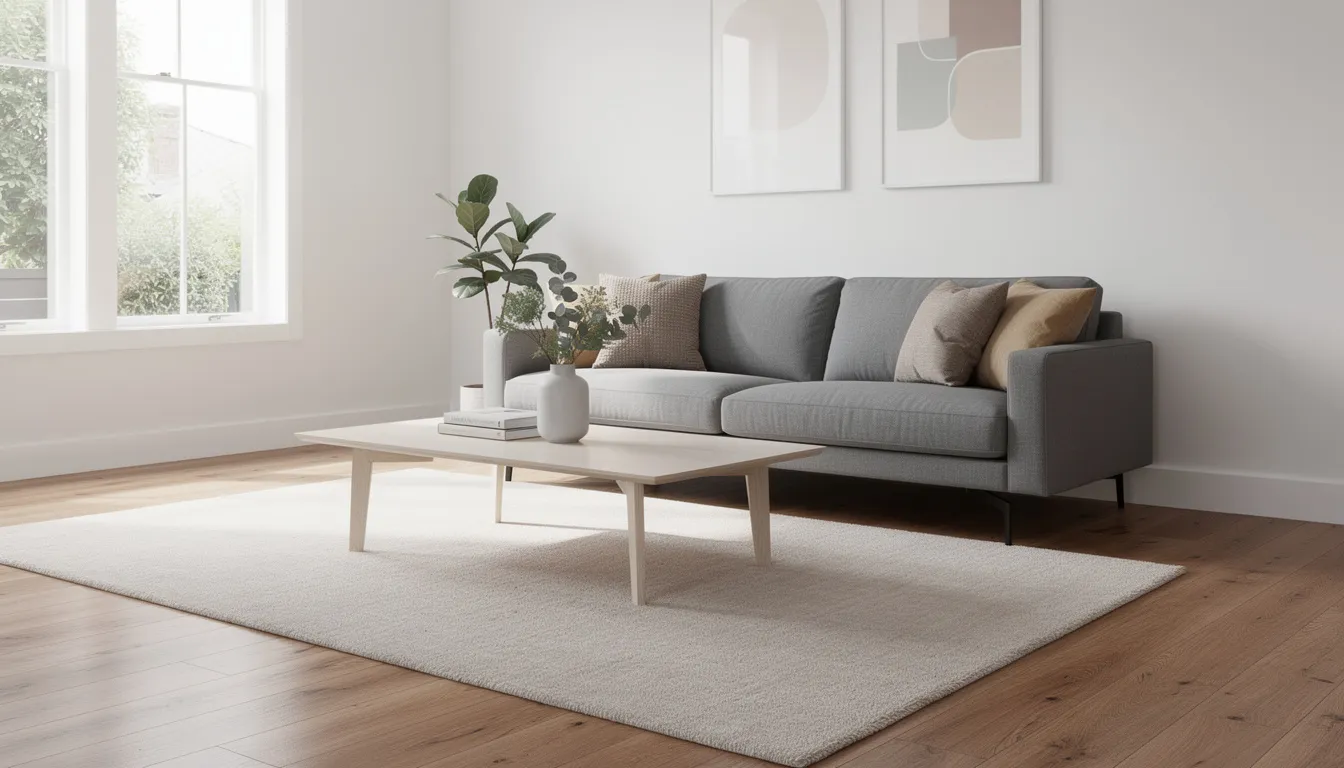
Size matters more than any other factor when picking the perfect rug for your living room. Get the dimensions wrong, and even the most beautiful rug will look out of place—too small creates a disjointed aesthetic, while an overwhelming size can make movement difficult.
Here's what you need to know about rug sizes for Australian living rooms:
|
Rug Size |
Best For |
Typical Room Size |
|---|---|---|
|
160 x 230 cm |
Compact apartments, small living areas |
2.5 x 3 m |
|
200 x 300 cm |
Standard living rooms are the most common choice |
3 x 4 m |
|
250 x 350 cm |
Larger open-plan spaces |
4 x 5 m |
|
300 x 400 cm |
Expansive living areas, grand rooms |
5 x 6 m+ |
|
The essential rule of thumb: Choose a rug large enough so that at least the front legs of your sofa and armchairs sit on it, with approximately 20–30 cm of visible bare floor between the rug edge and your walls. This creates a frame effect, making the entire room feel larger and more intentional. |
|
|
For small spaces: In a typical Sydney or Melbourne apartment with a 2.5–3 m-wide living area, a 160 x 230 cm or 200 x 300 cm rug can create the illusion of more space. The key is ensuring the rug extends beyond your coffee table on all sides by at least 15–20 cm.
For larger rooms: In open-plan homes measuring 4 x 5 metres or more, step up to 250 x 350 cm or even 300 x 400 cm. Large rugs define a generous seating zone and prevent the room from feeling empty or lacking a focal point.
How to measure before you buy:
-
Assess your seating area by measuring from the outer edge of your sofa to the outer edge of your chairs.
-
Add 20–30 cm to each side.
-
Round up to the nearest standard rug size.
-
Use painter's tape to mark the dimensions on your floor before you order
This technique helps you visualise exactly how the rug will sit with your furniture, eliminating the guesswork and ensuring you find the right size rug before it arrives at your door.
Rug Placement: How to Position Your Living Room Rug
Once you've selected the right rug size, placement determines whether your living room feels pulled together or awkwardly arranged. The position of your rug relative to your furniture makes all the difference.
Three classic placement layouts:
|
Layout Style |
Description |
Best For |
|---|---|---|
|
All legs are on the rug |
Every piece of furniture sits completely on the rug |
Large, luxurious spaces with 250 x 350 cm+ rugs |
|
Front legs only |
Sofa and chair front legs on rug, back legs on floor |
Most common approach, works with 200 x 300 cm rugs |
|
Coffee table only |
Rug centred under coffee table, extending beyond it |
Compact rooms, rentals, budget-conscious styling |
|
Practical example: For a standard 3-seat sofa facing a 65" TV with two armchairs on either side, your rug should extend at least 30 cm beyond the outer edge of each armchair and reach under the front legs of all seating. This creates enough space for feet to rest comfortably on the rug while maintaining visual balance. |
|
|
Corner and L-shaped sofas: These require special attention. Ensure that at least the front legs of both sections sit on the rug to avoid the awkward "floating" chaise look, where one part of the sofa appears disconnected from the rest of the room.
Open-plan living and dining rooms: Use your living room rug to visually separate the lounge from the dining table without overlapping the dining area. Leave at least 60 cm between rugs if you have two, allowing each space to breathe while maintaining a cohesive feel throughout.
Centre your rug relative to your seating area rather than the room walls. In older Australian homes where walls and windows aren't perfectly symmetrical, aligning furniture with the existing layout creates better visual harmony than striving for architectural symmetry.
Materials and Pile: Matching Your Rug to Real Life
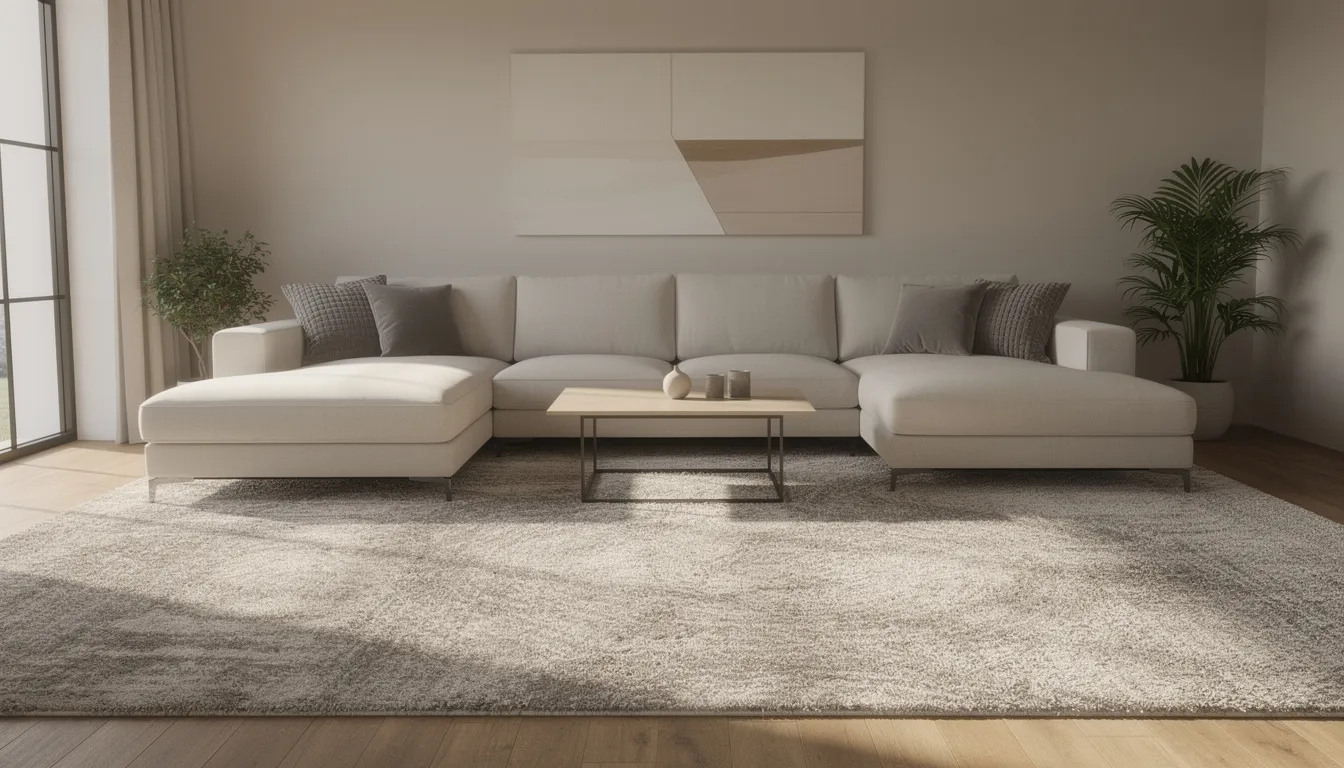
Australian lifestyles demand rugs that can handle real life—kids running through with sandy feet after the beach, pets finding their favourite spot on your floor, and the relentless dust and sun that comes with our climate. Your material choice determines how your rug will look and perform for years to come. Rugs made from durable materials are ideal for high-traffic areas as they resist wear and are easier to clean. Easy-to-clean materials are essential for maintaining the cleanliness and hygiene of your living space. Rugs in darker shades are better for high-traffic areas as they show wear and tear less than lighter colours. Washable rugs are also gaining popularity for their practicality and aesthetic appeal in busy households.
Wool rugs:
-
Naturally durable and crafted to withstand high foot traffic in busy family living rooms
-
Contains natural lanolin that provides built-in stain resistance and water repellency.
-
Ideal for suburbs like Brisbane or Perth, where durability matters
-
Higher upfront cost, but typically lasts decades with proper care.
-
Naturally absorb dust and allergens, making them suitable for allergy-prone households.
-
Natural fibres like wool and jute are durable and suitable for high-traffic areas.
Synthetic options (polypropylene, nylon, polyester):
-
Budget-friendly choice perfect for rentals and first homes
-
Easy to clean—most spills wipe away without leaving stains.
-
Colourfast in bright, sunlit rooms where natural fibres might fade
-
Versatile and available in virtually any colour or pattern
-
Ideal if you have young kids or pets and need low-maintenance flooring
-
Synthetic fibres like nylon and polyester are commonly used for their durability and ease of cleaning.
-
Stain-resistant materials are especially beneficial for families with children and pets, enhancing durability and ease of cleaning.
-
Rugs in darker shades are better for high-traffic areas as they show wear and tear less than lighter colours.
Natural fibres (jute, sisal, cotton):
-
Beautiful textured appearance, perfect for coastal or boho aesthetics
-
Works well in medium-traffic lounges and adds visual interest through its organic weave.
-
Feel coarser underfoot—less ideal for crawling babies or those who prefer softness.
-
Suit casual living spaces where their natural beauty can shine.
-
Wool blend rugs combine the best of both: natural fibres with added durability.
-
Natural fibres like jute offer great texture but are best suited to low-traffic areas because they wear more quickly.
-
Natural fibres like wool and jute are durable and suitable for high-traffic areas
Understanding pile height:
|
Pile Type |
Characteristics |
Best For |
|---|---|---|
|
Low-pile/Flatweave |
Easy to vacuum, chairs roll smoothly, and minimal dirt trapping |
High traffic areas, under doors, families with pets |
|
Medium-pile |
Balance of softness and practicality, versatile |
Every day, living rooms in most Australian homes |
|
High-pile/Shag |
Luxurious warmth, plush comfort, cosy feel |
Media rooms, snug lounges, low-traffic spaces |
|
High-pile or shag rugs offer exceptional comfort but require more maintenance and are best for low-traffic areas. |
|
|
Before choosing from Upinteriors' range of rug materials, consider how often you entertain guests, whether you have pets that shed, and what cleaning routine realistically suits your lifestyle. Durable materials matter more than aesthetics if your living room is used frequently.
Colour and Pattern: Creating the Mood of Your Living Room
Your living room rug sets the colour palette for the entire space, influencing everything from how light feels to how cohesive your decor appears. Choosing the right colours and patterns is crucial for creating the mood you want.
Neutral colour strategies:
-
Neutral colours like beige, oatmeal, grey, charcoal and warm taupe create a calm base that complements the white walls and timber floors common in Australian homes, offering timelessness and versatility to suit various furniture styles.
-
Neutral tones are favoured in modern Australian rug designs, providing versatility and a calming effect in living spaces.
-
Neutral tones allow other elements, such as wall art, cushions, and furniture, to stand out without visual competition.
-
Lighter shades of cream or white can make a small space feel larger and more open, while darker hues create an intimate, cosy feel.
-
Choosing rugs made of stain-resistant materials and neutral tones is a practical solution for households with pets and children.
-
A beige rug is a classic choice that creates a cosy, welcoming feel in your living room.
-
Dark tones, such as charcoal or deep grey, add depth and cosiness to larger rooms.
Bold statement options:
-
The colour of your rug can either blend into your space or become a bold focal point.
-
Deep teal, terracotta, rust, olive or mustard can energise a Melbourne terrace or inner-city apartment.
-
Rich jewel tones work as a focal point when the rest of the room remains relatively minimal.
-
Bright colours like yellow, red or blue add personality but require careful coordination with existing decor.
-
Warm hues like red, orange, and yellow energise spaces and boost happiness and conversation.
-
Cool colours like blue, green, and violet have a calming effect and help reduce stress and anxiety.
-
A black living room rug can add drama and sophistication to your space, serving as a bold contrast to lighter colours.
-
Consider your lifestyle before committing—bold choices make a statement but can be difficult to change.
Pattern choices:
-
Subtle geometrics suit modern minimalist spaces and add visual interest without overwhelming
-
Vintage-inspired patterns excel at concealing everyday spills and dirt.
-
Stripes can visually lengthen a narrow living room when oriented correctly.
-
A patterned rug works best when your sofa and chairs are solid colours.
-
If your existing furniture features bold patterns, opt for a solid or minimally patterned rug to maintain balance.
Coordinating with existing furniture:
-
Pair a light grey sofa with a textured charcoal rug for contemporary sophistication.
-
Pair a tan leather sofa with a cream-and-terracotta rug for warm, inviting harmony.
-
Pull 2-3 complementary colours from your rug into cushions and accessories to tie the room together.
-
When in doubt, select a rug that contains at least one colour already present in your room
Consider your light levels: In bright north-facing rooms, darker rugs feel cosy without making the space feel cramped. In shaded or south-facing rooms, lighter rugs help maintain an open, airy atmosphere. Test how colours appear in your specific light conditions at different times of day.
Designing a Cohesive Living Room: Rug + Furniture + Decor
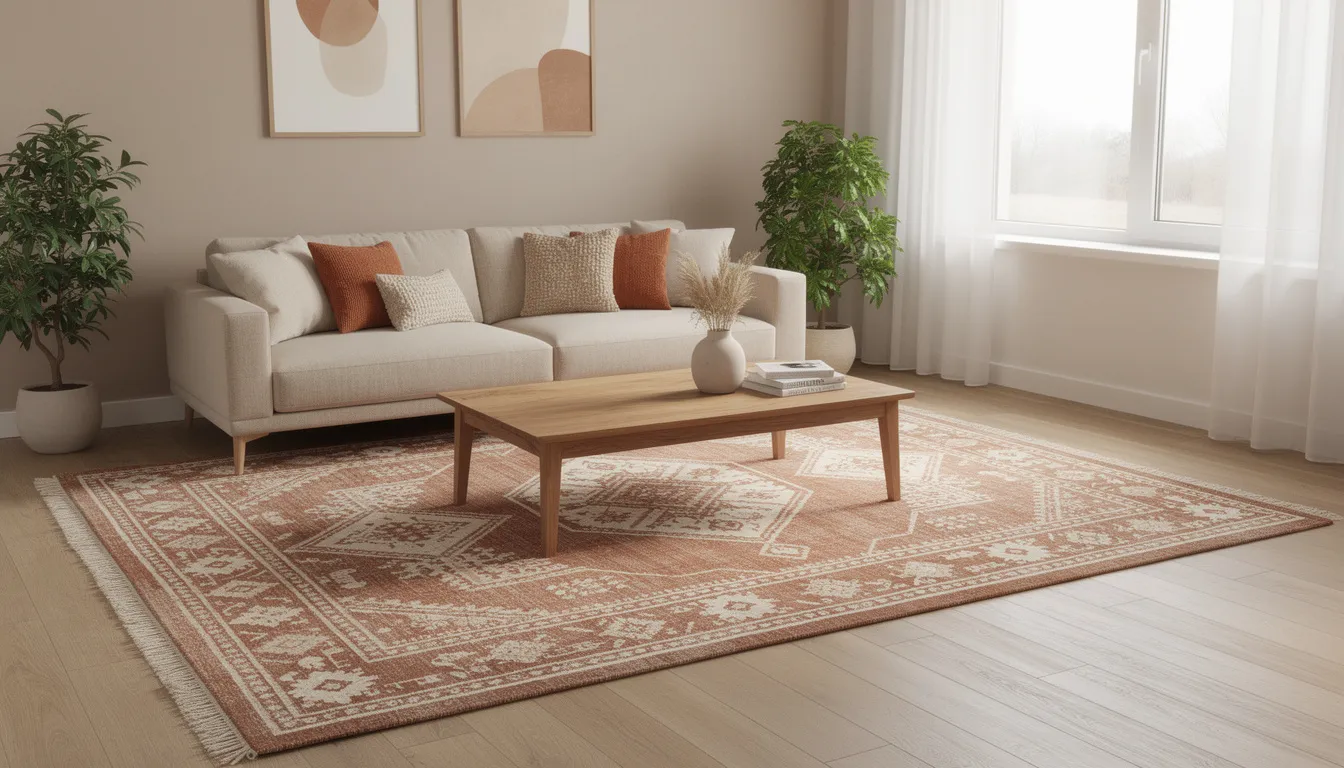
A rug shouldn't exist in isolation—it needs to work with your furniture, accessories, and the overall design of your home to create a space that feels intentionally curated rather than accidentally assembled.
Aligning rug style with furniture:
-
Modern low-profile sofas pair naturally with simple linear rugs featuring clean geometrics or solid colours.
-
Rounded sofas or curvy occasional chairs suit softer, organic rug patterns with flowing designs.
-
Traditional furniture styles complement vintage-inspired rugs with classic motifs.
-
Eclectic spaces benefit from rugs that contain multiple colours, allowing various furniture pieces to connect visually.
Working with Upinteriors' living room furniture:
-
Match rug colours to the timber tones of your coffee table or media unit for a cohesive, warm look.
-
Contrast metal finishes—if your furniture features black legs, consider pairing it with a grey or neutral rug to ground the look.
-
Use your rug as the starting point when selecting console tables and side tables.
-
Ensure the rug colour complements rather than clashes with any statement furniture pieces.
Tying in accessories:
-
Repeat 2-3 colours from your rug in cushions, throws and wall art to build visual harmony.
-
Avoid matching everything exactly—aim for complementary colours and similar tones rather than perfect matches.
-
Let your rug inspire your accent colour selections throughout the room.
-
Use your rug's pattern scale to guide other patterns in the space
Managing scale and visual balance:
-
If your rug features bold patterns, keep larger furniture pieces more minimal and solid.
-
When your sofa makes a statement with bright colours or a dramatic shape, opt for a quieter, more neutral rug.
-
In a minimalist space, one patterned rug can add texture and visual interest without cluttering the aesthetic.
-
Balance busy rugs with plenty of negative space on walls and surfaces
For renters looking to transform basic builder carpets or tiles, one generous rug plus a few statement decor pieces from Upinteriors can create a designer look without any renovations. It's an easy way to personalise your living space while maintaining your bond.
Budget and Quality: Making Smart Rug Investments
When choosing the perfect rug, balancing your budget with quality is essential to a successful living room transformation. A well-crafted rug does more than cover your floor—it provides extra cushioning, warmth, and beauty that elevates your entire space. While it might be tempting to opt for the lowest price, remember that a rug is a key element in your home's decor and should be able to withstand daily life.
Consider the room type and the level of foot traffic it receives. For high-traffic areas, such as family living rooms or busy entryways, durable materials like nylon or polypropylene are a smart investment. These fibres are designed to resist wear and tear, making them perfect for spaces where life happens. In contrast, a wool blend rug can add a touch of luxury and warmth to bedrooms or quieter living areas, offering both comfort and longevity.
It's important to remember that spending a little more upfront on a quality rug can save you money over time by reducing the need for frequent replacements. Look for rugs that are tightly woven and well-constructed, as these will hold up better under daily use. By considering both your budget and the essential elements of quality and durability, you'll find the perfect rug that brings lasting beauty and comfort to your home.
Selecting a Rug for High Traffic Areas
High-traffic areas in your home—such as hallways, entryways, and outdoor spaces—require rugs that are as durable as they are beautiful. The key is to choose materials that are durable, easy to clean, and able to handle constant foot traffic without showing signs of wear. Nylon, cotton, and polypropylene are excellent choices for these spaces because they resist dirt and stains and are easy to maintain.
A good rule of thumb is to select a rug with a low pile height and a dense weave. This construction helps prevent dirt and debris from getting trapped in the fibres, making cleaning quick and easy. Neutral tones such as grey or beige are especially practical, as they help to disguise everyday marks and keep your space looking fresh between cleans.
Don't overlook the importance of comfort and security in these busy zones. A well-chosen rug can add softness underfoot, reduce slips, and provide a welcoming touch to your home's busiest areas. Whether you're looking for an outdoor rug that withstands the elements or a hallway runner that stands up to daily use, focusing on the right materials and tones will help you create a space that's both functional and stylish.
Adding Texture and Interest to Your Living Room
A living room rug is more than just a floor covering—it's a powerful way to add texture, warmth, and visual interest to your space. The right rug can beautifully frame your seating area, drawing the eye and tying together all the elements of your decor. When selecting a living room rug, consider the rug's width and placement relative to your furniture to ensure it enhances the room's proportions and flow.
If you're aiming for a minimalist look, a neutral-toned rug in a soft wool blend can add subtle warmth and texture without overwhelming the space. On the other hand, a bold patterned rug can serve as a statement piece, injecting personality and energy while providing a striking contrast to solid-coloured furniture. Patterned rugs are also a clever way to introduce visual interest and break up large expanses of flooring.
No matter your style, the rug you choose should complement your living room's overall tone and decor. By thoughtfully adding a rug, you can create a beautiful, inviting space that feels both cohesive and uniquely yours.
Caring for Your Living Room Rug
Australian conditions—dust, sand tracked in from the beach, intense sun through windows—require mindful rug care to maintain appearance and hygiene over time. A little regular maintenance goes a long way.
Regular cleaning routine:
-
Vacuum once a week for average use, more frequently in high traffic areas or homes with pets
-
Use appropriate vacuum settings—low suction for flatweave, higher for plush piles.
-
Most rugs benefit from rotating 180 degrees every 6-12 months to even out wear and sun exposure; for best results, rotate your rug every six months for even fading and wear
-
Shake smaller rugs outdoors periodically to remove embedded dirt and dust.
-
Avoid walking over your rug with rubber-soled shoes and slippers to minimise excessive shedding and wear.
Dealing with spills and stains:
-
Blot spills immediately with a clean cloth—never rub, as this pushes liquid deeper into fibres. If spills occur, time is of the essence; absorb the liquid as quickly as possible.
-
Work from the outside of the stain inward to avoid spreading.
-
Follow the specific care label instructions for your rug.
-
For spot cleaning, test any products in an inconspicuous area first.
-
Wool naturally resists stains better than many other materials, making it easier to clean.
Rug pad benefits:
-
A quality rug pad prevents slipping on tiles or floorboards, reducing safety risks by up to 80%
-
Provide extra cushioning underfoot to enhance comfort and softness in your living experience.
-
Extend rug life by 50% by reducing friction between the rug and the floor.
-
Help rugs lie flat without curling at edges or bunching in the centre.
-
Choose felt-rubber hybrids for hard floors, thinner non-slip versions for carpeted areas
Professional care:
-
Schedule professional deep cleaning every 12-18 months for busy family homes to maintain overall cleanliness and a hygienic home environment.
-
More maintenance may be required for light-coloured rugs or those in high-traffic zones.
-
Professional cleaning helps remove embedded dirt, allergens and odours that vacuuming can't reach.
-
Worth the investment to protect long-lasting quality pieces
Sun protection:
-
Rotate rugs in north- or west-facing living rooms to prevent uneven fading.
-
Consider window treatments that filter harsh afternoon sun.
-
Natural fibres and some dyes fade faster than synthetics—account for this in your care plan.
Final Tips and Considerations
As you search for the perfect rug, keep a few final tips in mind to ensure your choice enhances your home for years to come. First, always measure your room and furniture carefully—this helps you find a rug that fits just right and provides extra cushioning where it's needed most. Next, consider the maintenance requirements of your chosen rug. Opt for materials and styles that are easy to clean and maintain, so your rug stays looking beautiful with minimal effort.
Think about the overall decor and tone of your space, and select a rug that complements your existing style. Don't forget to add a quality rug pad underneath; this simple addition can provide extra cushioning, prevent slipping, and extend the life of your rug. To keep your rug in top condition, avoid walking on it with dirty or wet shoes, and try to keep it out of direct sunlight to prevent fading.
By following these tips and carefully considering your options, you'll find the perfect rug to transform your living room—adding comfort, warmth, and beauty you'll enjoy every day.
Upinteriors: Finding the Right Rug Online in Australia
Shopping for a rug online can feel challenging when you can't see the colours in person or feel the texture underfoot. At Upinteriors, we've designed our collection and website to make confident choices as easy as possible.
What sets Upinteriors apart:
-
Curated range of modern living room rugs sized specifically for typical Australian floor plans, from compact city apartments to expansive open-plan homes
-
Designs selected to pair seamlessly with our sofas, coffee tables, consoles and wall art, allowing you to build a full room look from one store.
-
Competitive pricing that brings designer aesthetics within reach for everyday Australians
-
Styles chosen specifically for Australian tastes and living conditions
Shopping with confidence:
-
Use detailed product photos to visualise how colours and patterns will suit your existing furniture.
-
Check dimensions carefully against your measurements before adding to the cart.
-
Read style descriptions to understand how each rug fits different aesthetics—whether you prefer minimalist, traditional, coastal or eclectic looks.
-
Browse our complete collection of living room furniture and decor to discover complementary pieces.
Convenient delivery:
-
Fast shipping to metro areas across Sydney, Melbourne, Brisbane, Perth, Adelaide and beyond
-
Regional delivery options are available so that you won't wait months for your order.
-
Easy returns policy if the rug doesn't work in your space
Whether you're furnishing your first home, refreshing a tired living room, or simply looking for inspiration, Upinteriors makes it simple to find options that suit your personal style, budget and lifestyle needs. Visit our website to discover the perfect rug for your Australian home.
Frequently Asked Questions
What size rug is best for a standard Australian living room?
For most living rooms measuring around 3 x 4 metres, a 200 x 300 cm rug is usually the best fit. This size allows the front legs of your sofa and chairs to sit comfortably on the rug while leaving a visible floor frame along the edges. If your living room is larger—say 4 x 5 metres or more—consider sizing the rug to 250 x 350 cm to clearly define the seating area and prevent it from looking small in a large room.
Can I put a rug over carpet in my living room?
Absolutely. Layering rugs over carpet is common in rentals and newer builds to add texture, define the seating zone, and personalise a space without permanent changes. Choose a rug with enough weight to stay in place, or use a rug pad designed for carpet-on-carpet applications to prevent ripples. Alternatively, opt for a contrasting texture—such as a flatweave rug over plush carpet—to create visual interest and depth.
How do I choose between a light and dark rug if I have kids or pets?
Mid-tone or patterned rugs are most forgiving for family living rooms, hiding everyday marks and wear better than very light or very dark solids. A light cream rug shows every speck of dirt, while a pure black rug reveals dust and pet hair. Look for durable fibres, such as wool-blend rugs or synthetics, and select patterns with colours that complement your sofa or flooring to help disguise minor damage over time.
Should my coffee table be centred on the rug?
In most layouts, your coffee table should sit roughly in the centre of the rug relative to your seating arrangement, even if the rug itself isn't perfectly centred in the room. Visual balance with your sofa and armchairs matters more than perfect alignment with the walls. The goal is to ensure people can comfortably reach the table from all seating positions, while the arrangement feels intentional and inviting.
How can I determine whether a patterned rug will overwhelm my living room?
Start by checking how many strong patterns already exist in your space—bold curtains, heavily patterned cushions, statement wallpaper. If several patterns compete for attention, choosing a more subtle rug design reduces visual clutter. When introducing a patterned rug, select one that uses colours already present in your room in a softer, repeating motif. This adds interest and variety without making the space feel chaotic or overwhelming.